The exhibition Freeze Frame? is curated by Radek Wohlmuth, it will last a month, and will end on May 16.
It features artists (seventeen? eighteen? please see the alphabetical list on the gallery’s website) who typically have solo exhibitions at the Bold Gallery, but now they were brought together for a single idea — to explore how the cinematic way of seeing is reflected in contemporary painting, to draw attention to the cinematic principles that influence painting across generations and, continues the description of the exhibition, to show that today’s painters think with a camera rather than a sketchbook, and that film is as natural a model for them as landscape was for the Impressionists (the clearer the explanation, the more the viewer will see).
In other words, to force selected artists to show with one work (or maybe two or three — brevity is useful to the statement, and, no less important thing, the gallery space is limited), what film influenced them, whether they liked it or not (so that they still can’t forget it), or whatever else.
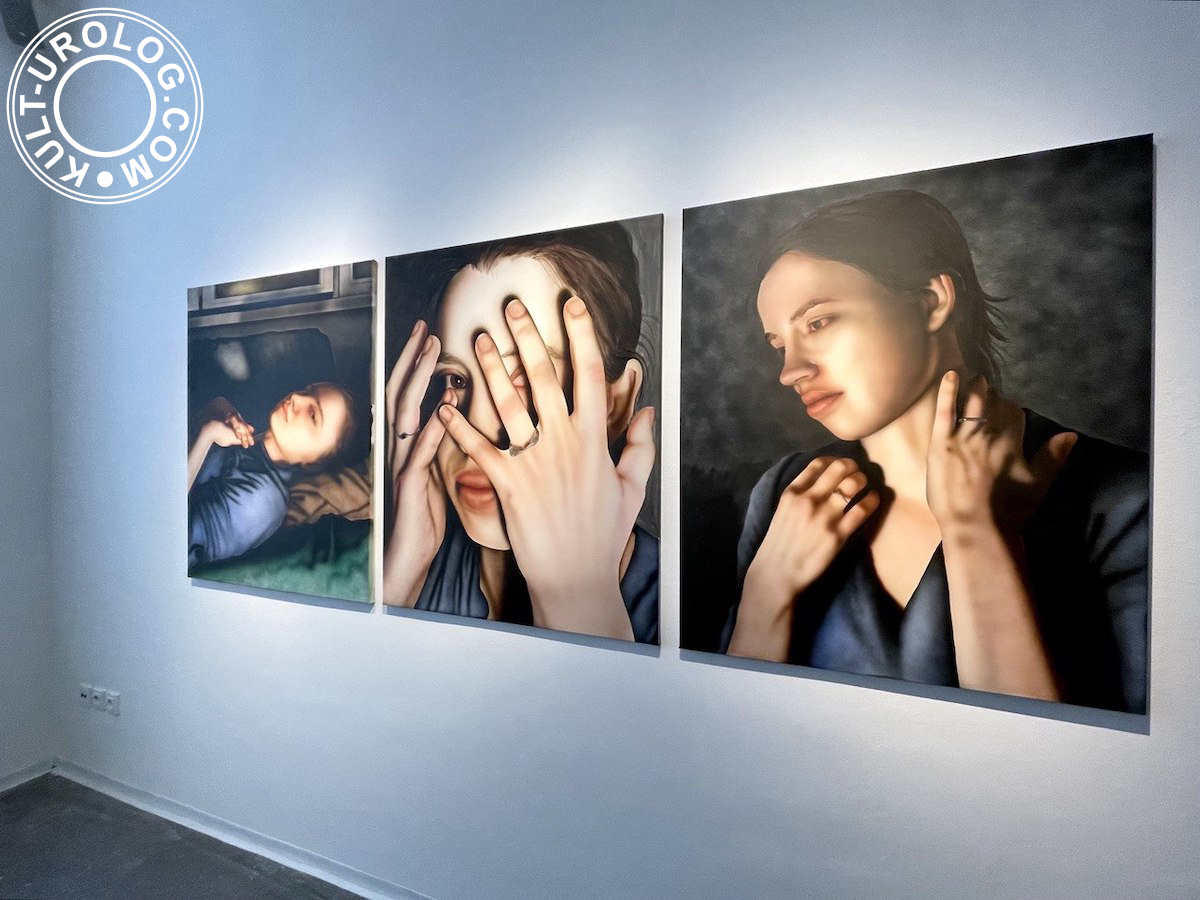
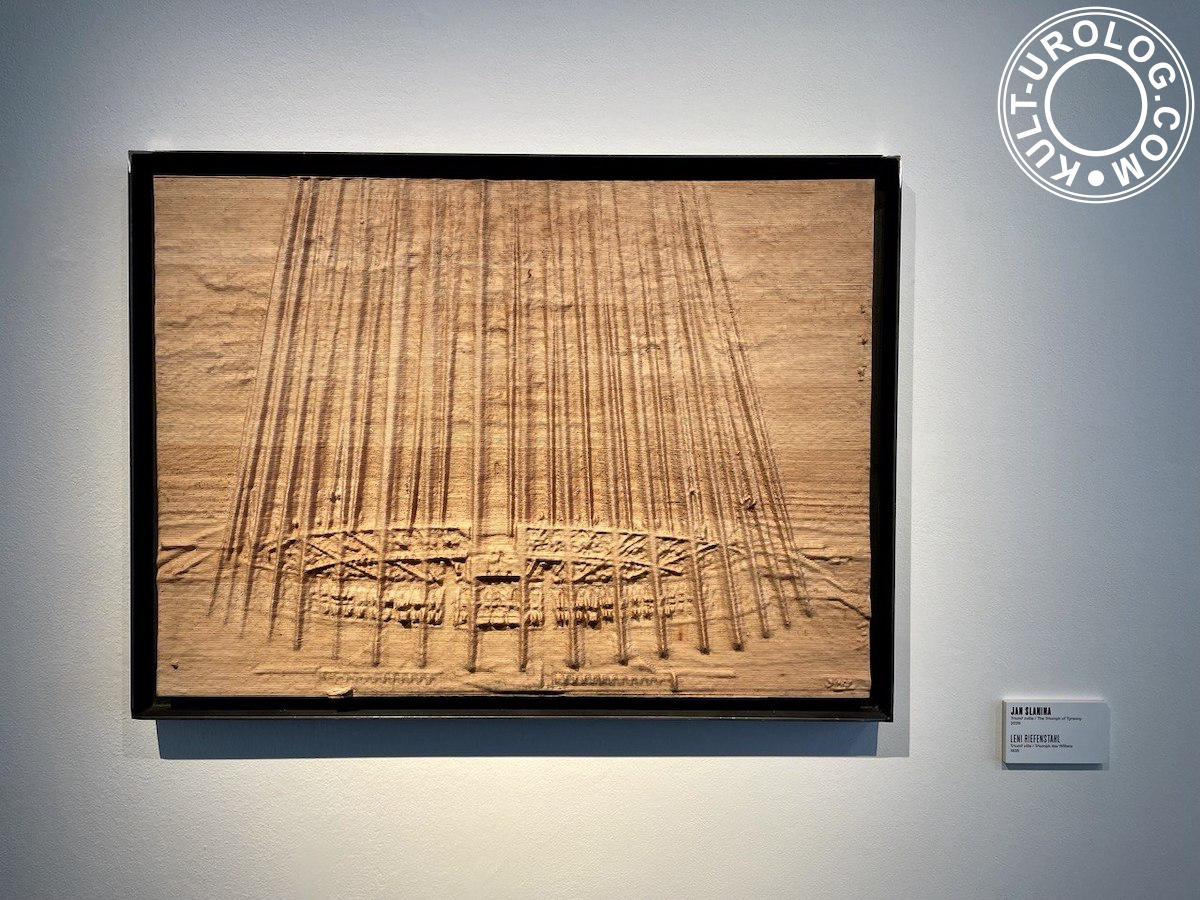
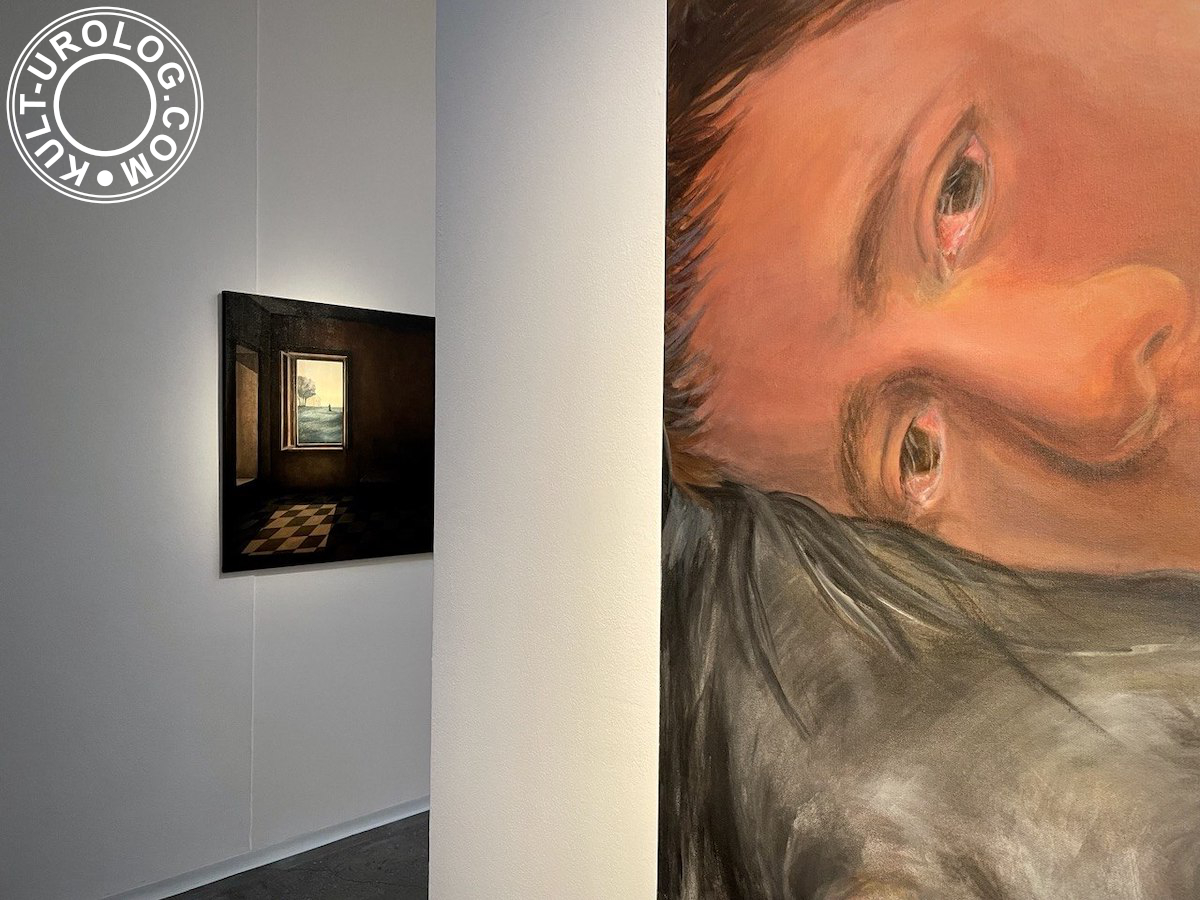
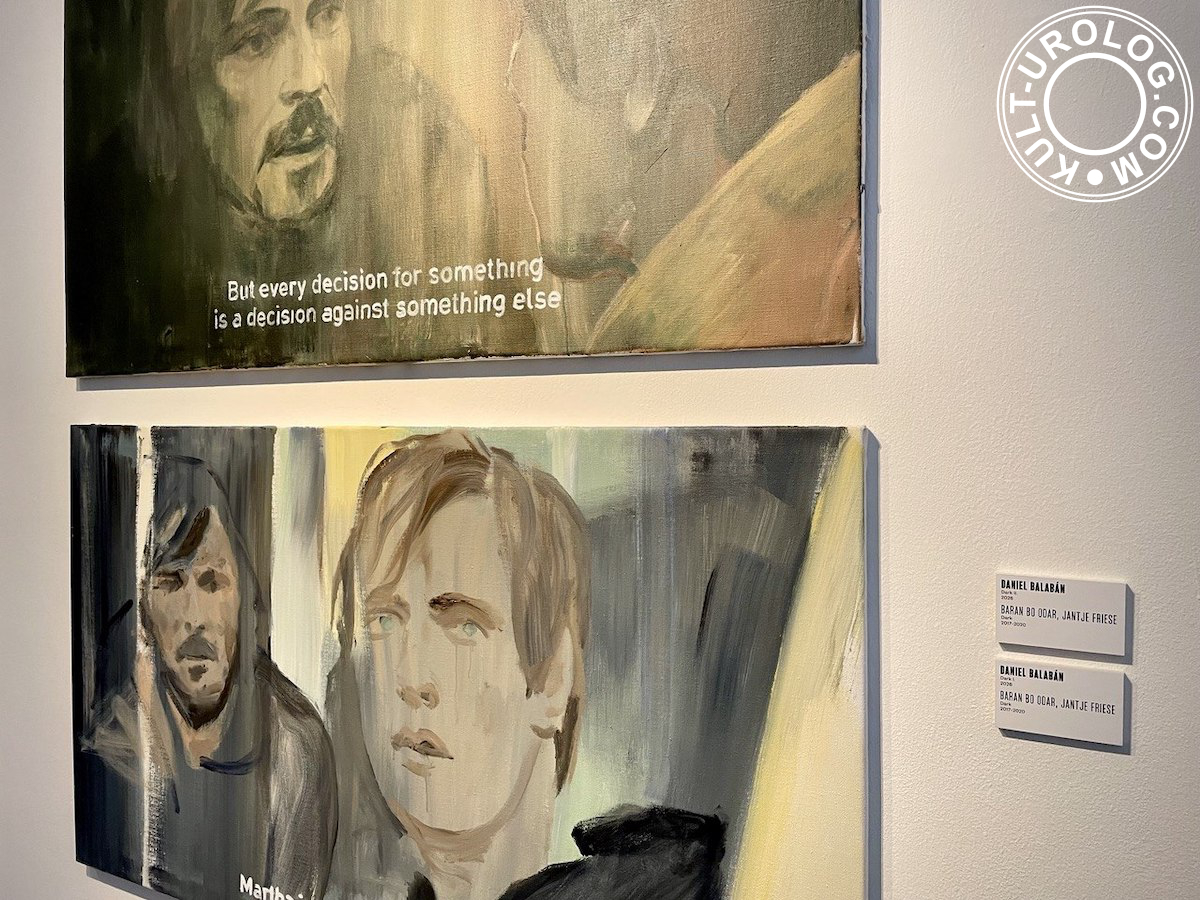
The discussion about the influence of cinema on our perception of the environment, and on impressionable artists, public tastes and sales statistics has been going on for a very long time (roughly since the advent of cinema; and the same goes for photography). But to stop discussing it is like to stop talking about the influence of Japanese woodblock prints on van Gogh or to stop filming Pride and Prejudice over and over again — impossible.
Trite? Yes. Too obvious? Especially during the time of mass creation and recreation of video content and complaints about AI? Yes, definitely. But it’s fun and pleasant. And always interesting.
It gives a visitor a lot of opportunities. For example, to recognise a particular film and consider whether what they see is similar to what they remember, to think about whether it resonates with them, whether it changes their perception, or does not affect anything at all. Perhaps find their favourite movie (but not necessarily) and compare impressions. Although the latter is like reading reviews: it allows you to either doubt your taste or to confirm the obvious, because you still saw something else there (texts, texts… Barthes is always in our hearts).
And then, on the way home, you can play a memory game: which films evoked associations in the artists’ minds? What was on the exhibition? Or who won at Cannes but wasn’t presented? And what was the name of the artist whose work you liked the most? It’s fun.
But what it gives to the artist? We do not know precisely.
The Freeze Frame? shows classics, or something that’s been recognised by the public and critics as anything but ordinary (from Visconti and Tarkovsky to Gerwig). It’s understandable and relatable to many backgrounds. It makes you feel smart and in tune with the enlightened public.
There are no specific scenes, no direct quotes, but associations and commentary (what else could there be? in our soulless era of copyright? and let’s not forget the author’s unique vision, that’s very important). We can see only one frame, and from it we can understand or guess what happened before and what will happen next (that is, one frame is more than the rest).
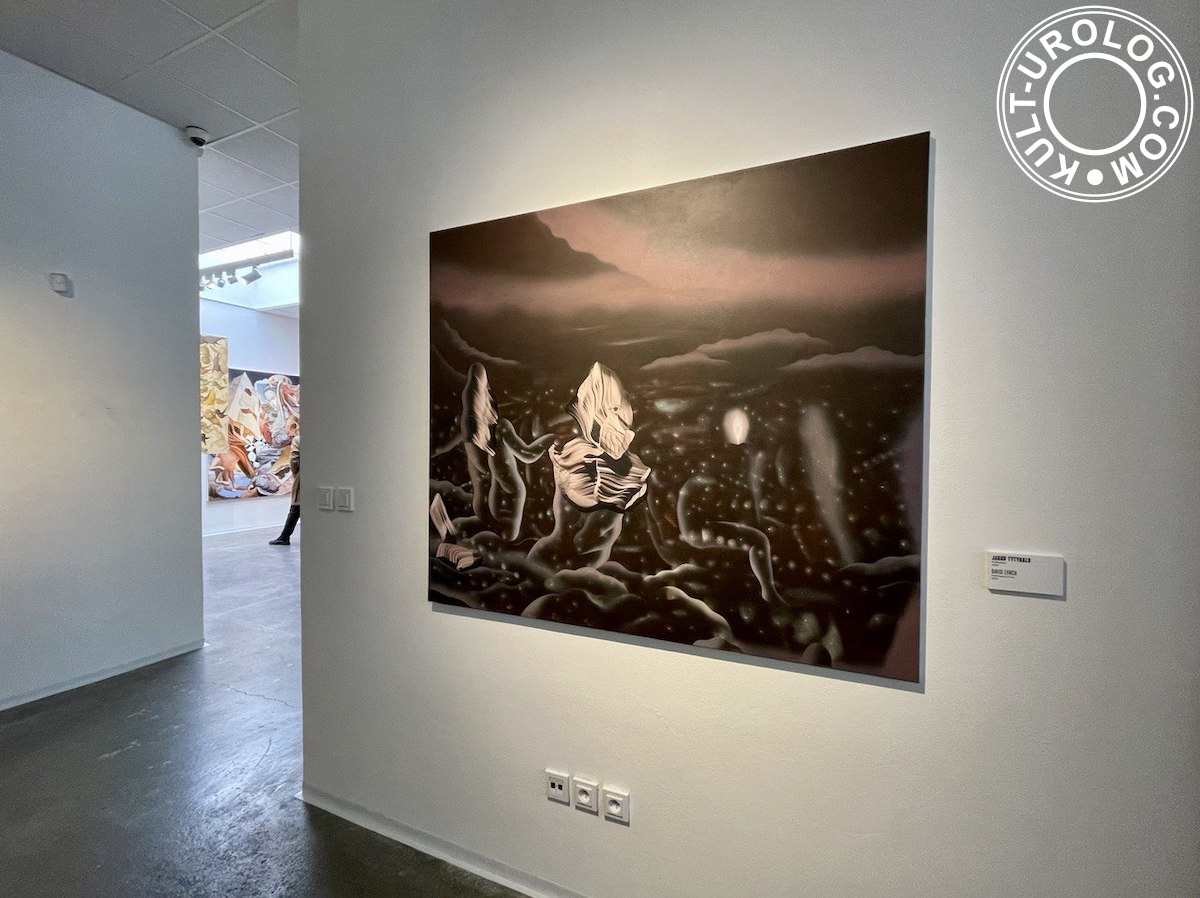
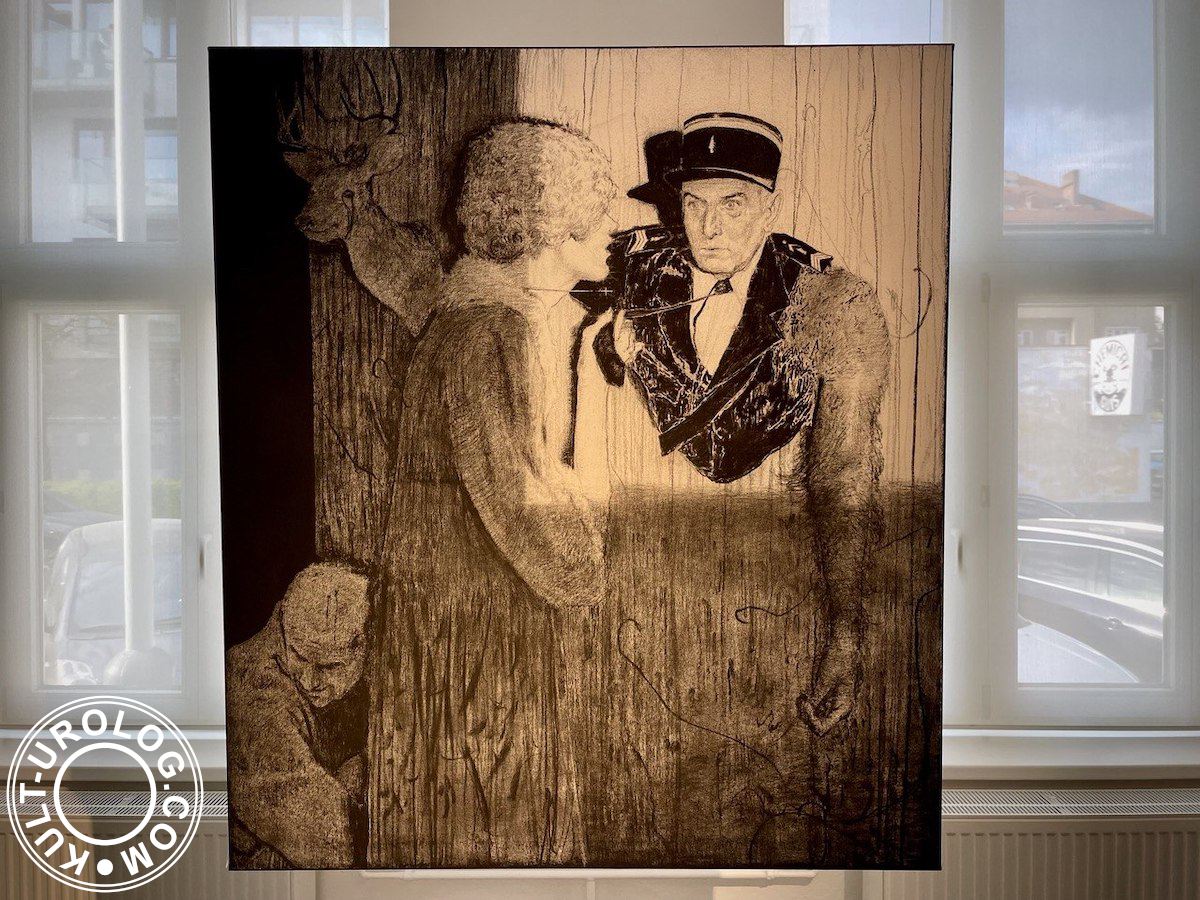
It’s implied that there are no direct references, but that’s only in theory. In practice, everything alludes: even if it was originally intended differently or wasn’t about that at all, the film’s title written on the side clearly points the way to think and the storyboard and the mood to recall (but remove the text — and what’s left? which brings us to a discussion of text, context, and image as text, a topic we certainly won’t explore here).
Although, given that everyone (both the artist and the audience) was born and lives in a world where cinema, a rectangular screen field with a moving image enclosed in it, and camera work are the norm, it is difficult to say what can be defamiliarised and singled out here (plus, a freeze frame is not a single image, but a multitude of repeating images, because that’s how cinema works, but continuing to think of all this stuff brings risk of ending up under the burden of the wrong topics, so we’ll stop where we are).
The exhibition opened on April 17, the vernissage took place the day before. As usual, everything was well hung and highlighted (very instagrammable and very phone camera-friendly), as usual, opening speech was short (not Gwyneth Paltrow’s Oscar monologue; something that needs to be appreciated because not everyone can do it). So it was a very nice opening, although in the end it became a little stuffy indoors (as usual), and the selfie stand had more meaning and significance while it stood inside the gallery; when it was moved to the entrance, almost nothing remained of it (#putselfiestandinsideagain #please).
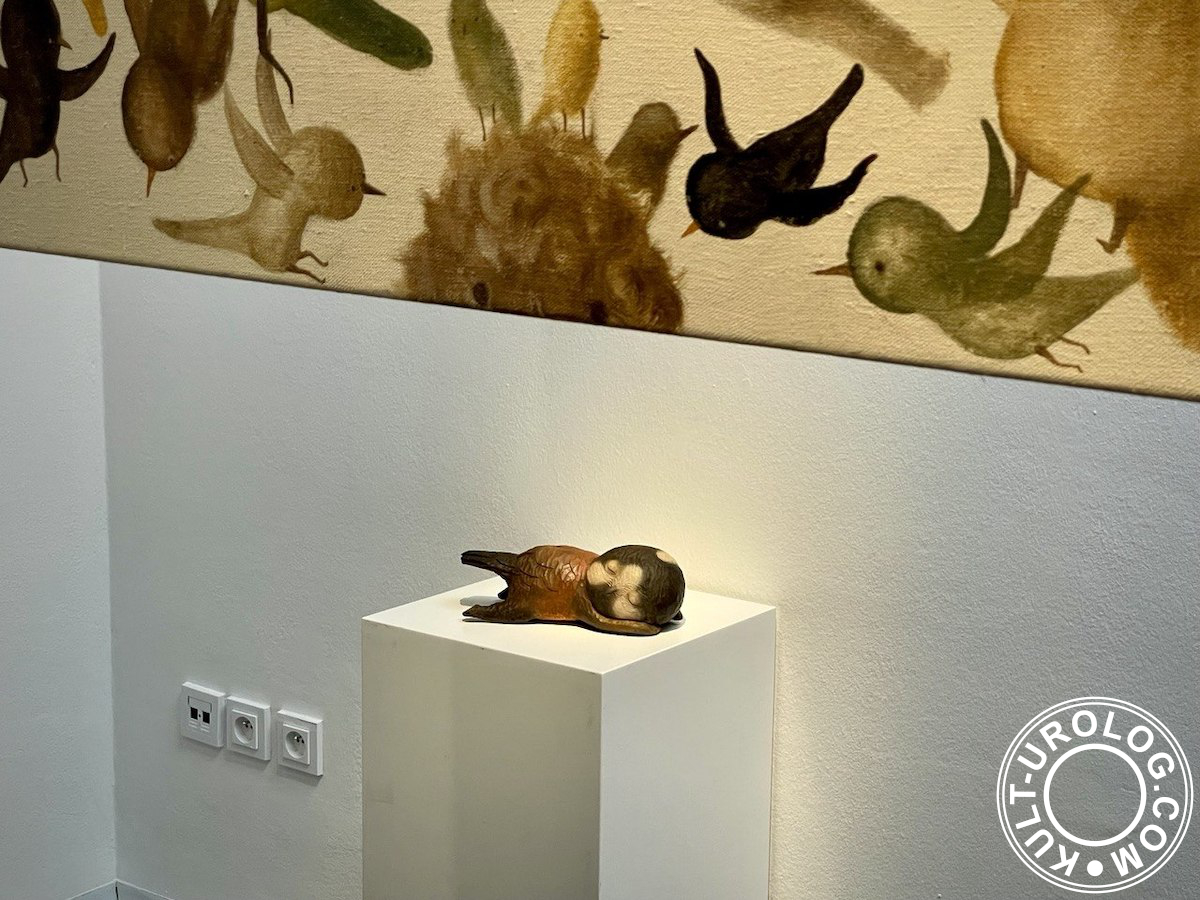
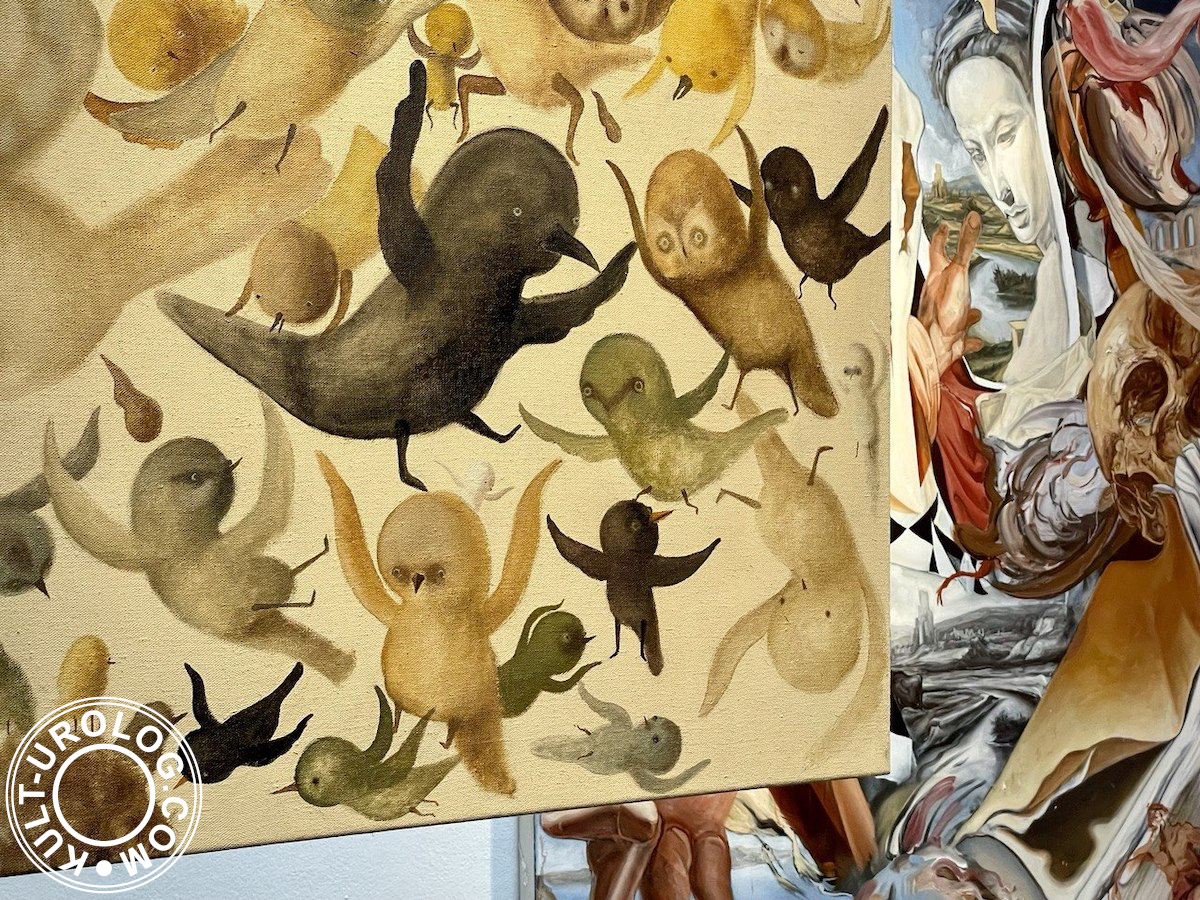
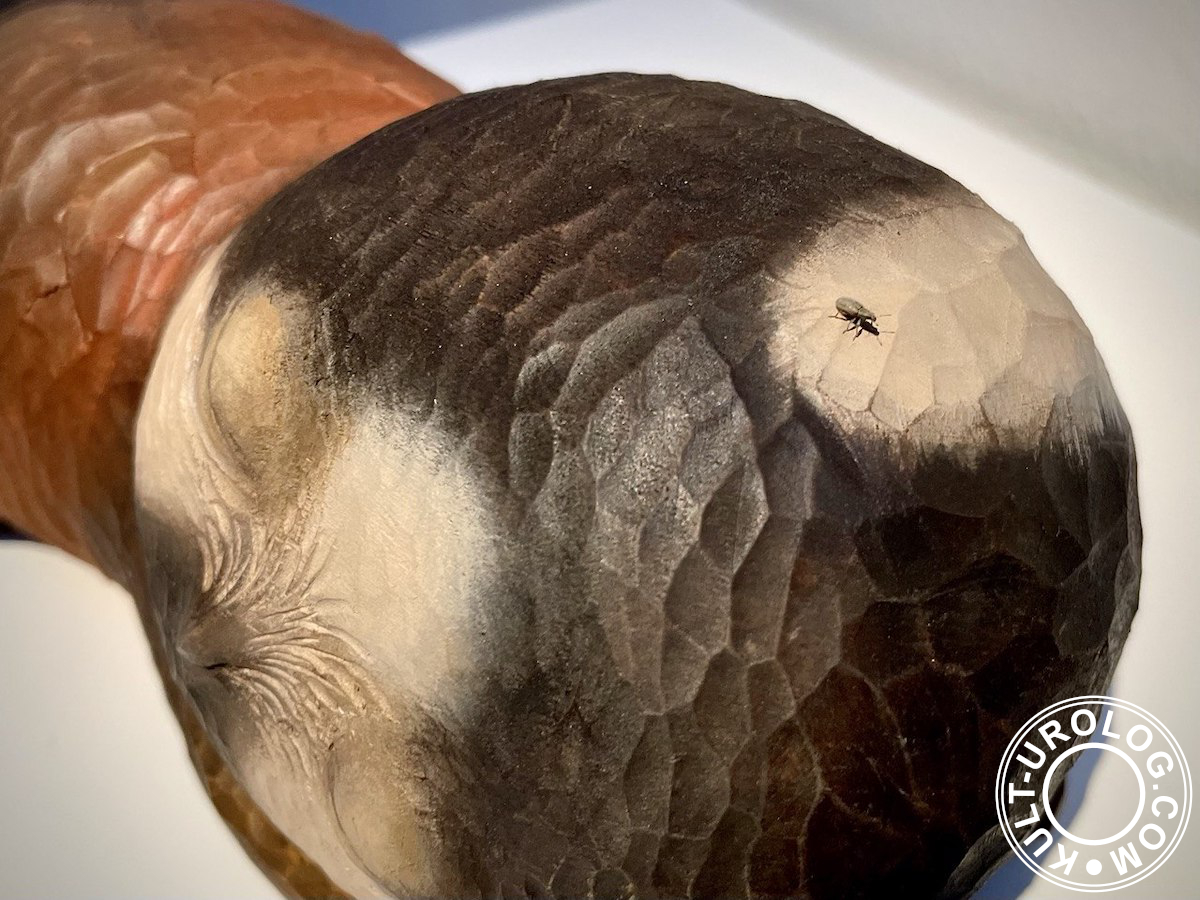
Why was I there too? Because, among other artists, there was Sota Sakuma (of course I love art in general and I am interested in Czech artists in particular, but I also want to be honest, so, yes, to lure myself into a gallery, I need a certain reason). Two works, in 2D and 3D, a painting and a sculpture, with the common theme of Hitchcock’s The Birds. And of course, I left enlightened and in tune. Because even if these birds look much (MUUUCH) kinder than Hitchcock’s (the sleeping baby bird is a most gentle creature in the… well, not world, but definitely in the gallery; and while everyone around was noisily discussing Art, we watched a small bug running around it, which also somehow ended up at the exhibition — like attracted like), now I know that I’m not the only one who sees Hitchcock’s films the way I see them.
Because Hitchcock is not scary. The Birds, Rear Window, North by Northwest, The Trouble with Harry (okay, technically it’s a comedy, so it has to be fun, but anyway), Blackmail (especially the second, sound version, especially the final sequence in it)… These films are funny. Not their famous suspense scenes (we still pretend to be normal people here, after all), but many other episodes make you smile. Inexperienced viewers of the past might have been afraid of something, everyone else can enjoy the cinematography, the meticulously constructed scenes (too meticulously) and the acting, or whatever else they want to enjoy, since they’ve decided to watch it.
So I had that rare sense of understanding of what was depicted this time.
And it was very comfortable.
