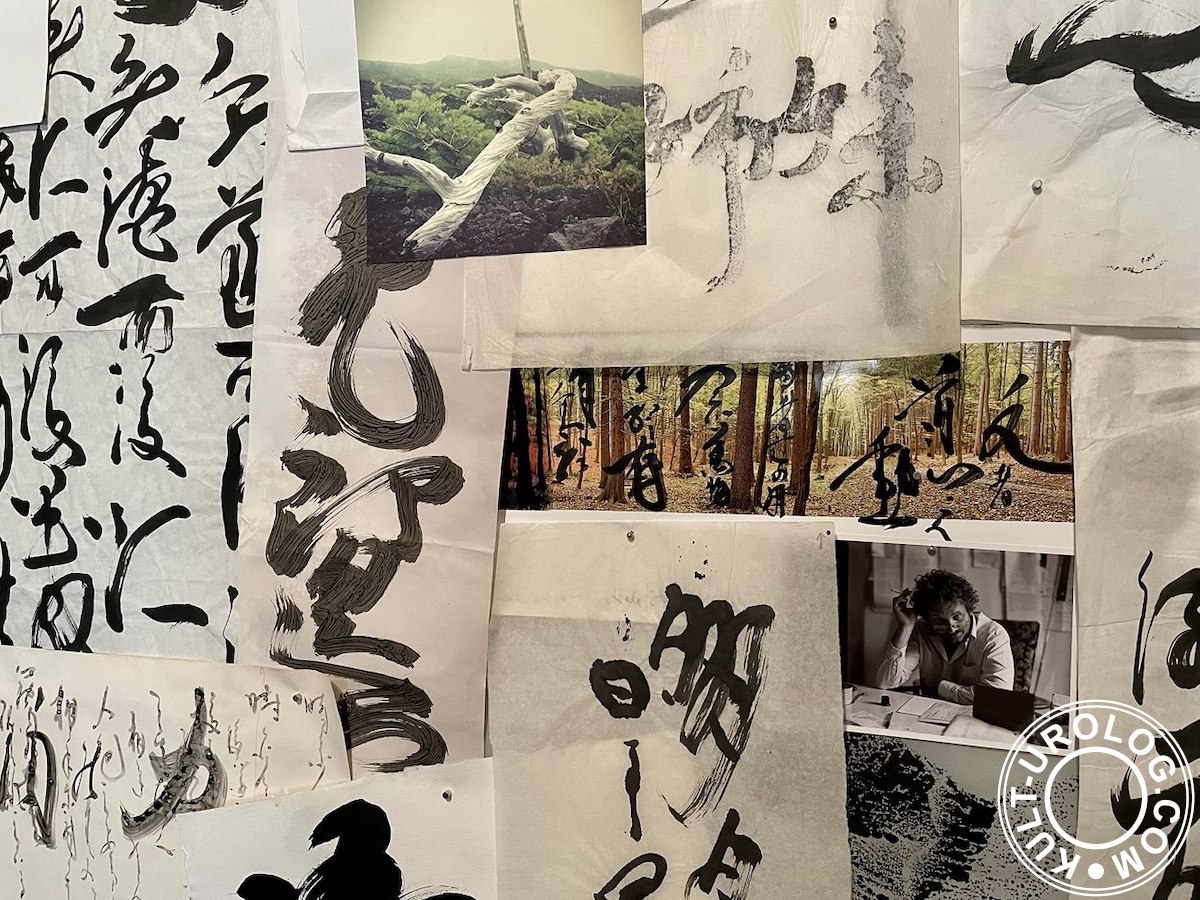
I’m in a very sticky situation. On the one hand, I’m tired of the narrative that everything Czech is great, and something made in the Czech style is better than everything else. On the other hand, the exhibition of Petr Geisler’s (a Czech-famous translator, journalist, Japanologist, photographer, teacher and self-taught calligrapher) works and the accompanying program are truly remarkable.
From another perspective, I have no reputation here to lose.
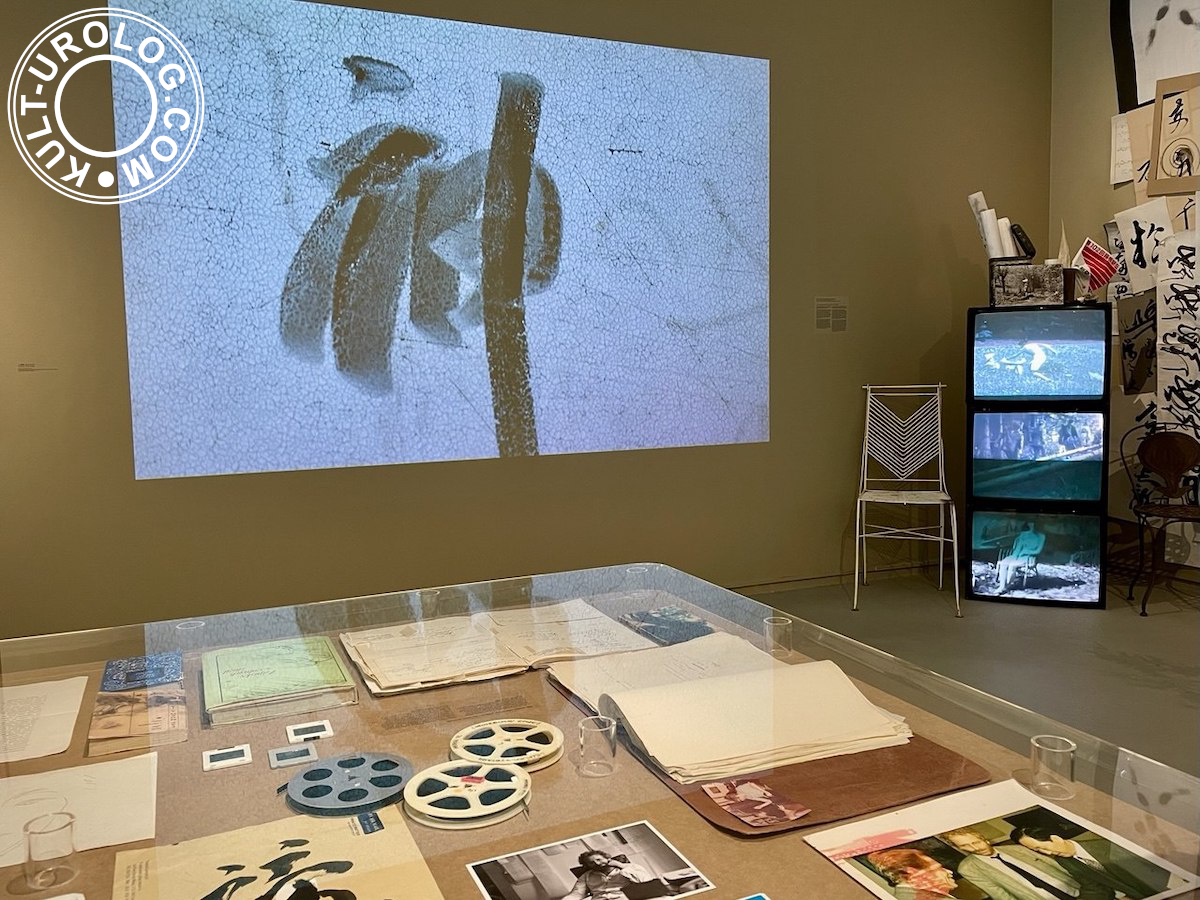
So, yes, I visited GA-I-SU-RA (the Japanese version of Geisler’s surname, written as ガイスラ, or «Gaisura», in katakana) at DOX Centre for Contemporary Art. Of course, I enjoyed it (I knew in advance that I would like it, and I liked it, more than once). Not every local museum has to offer something on the same scale (we’re not talking about the number of exhibits, but rather about the events and their content), so it would be a sin to miss it.
Japan is in vogue now, and this mass craze has its benefits: there is plenty of scope for Japanophiles to explore within the exhibition.
At the same time GA-I-SU-RA even if easy to understand, does not slide into too much popular culture, and is not overloaded with unnecessary details (showing a lot, but not showing everything is a rare talent).
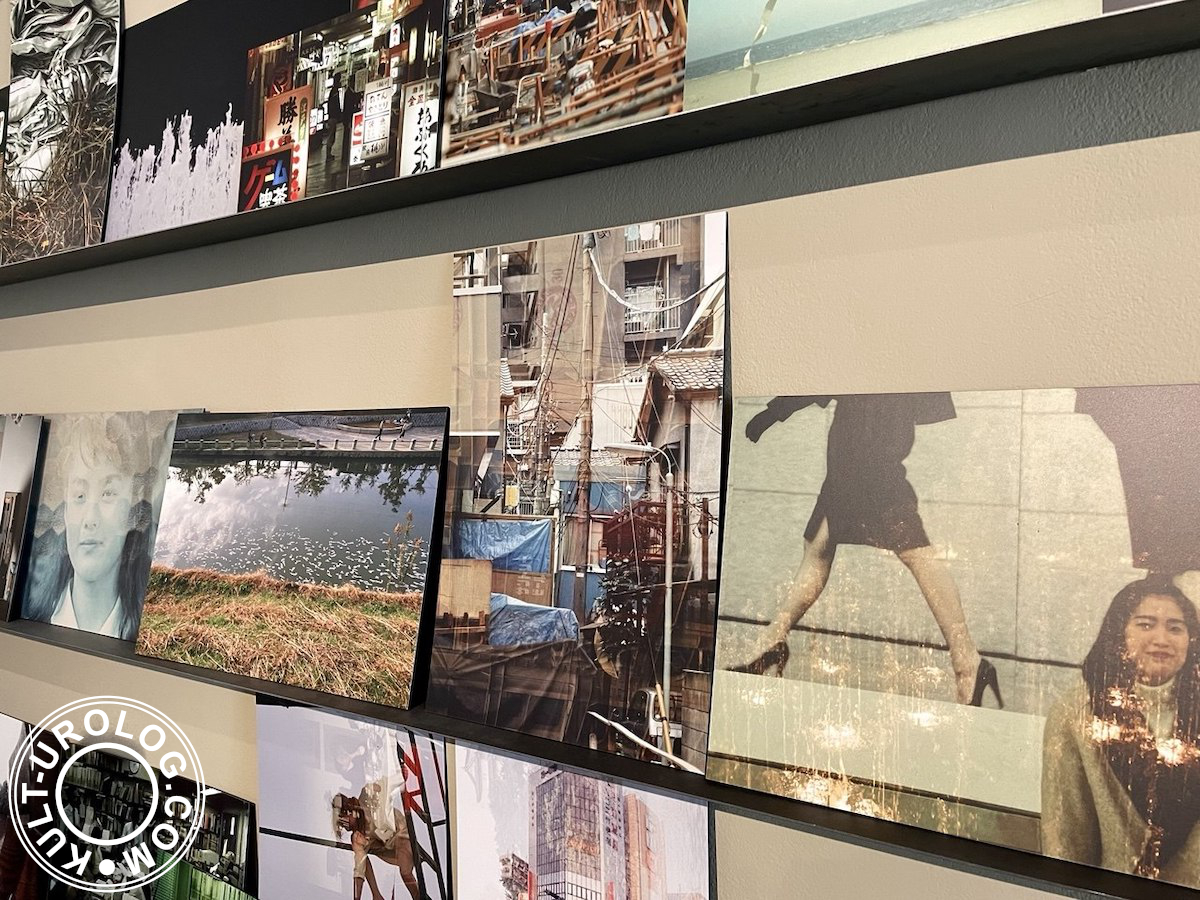
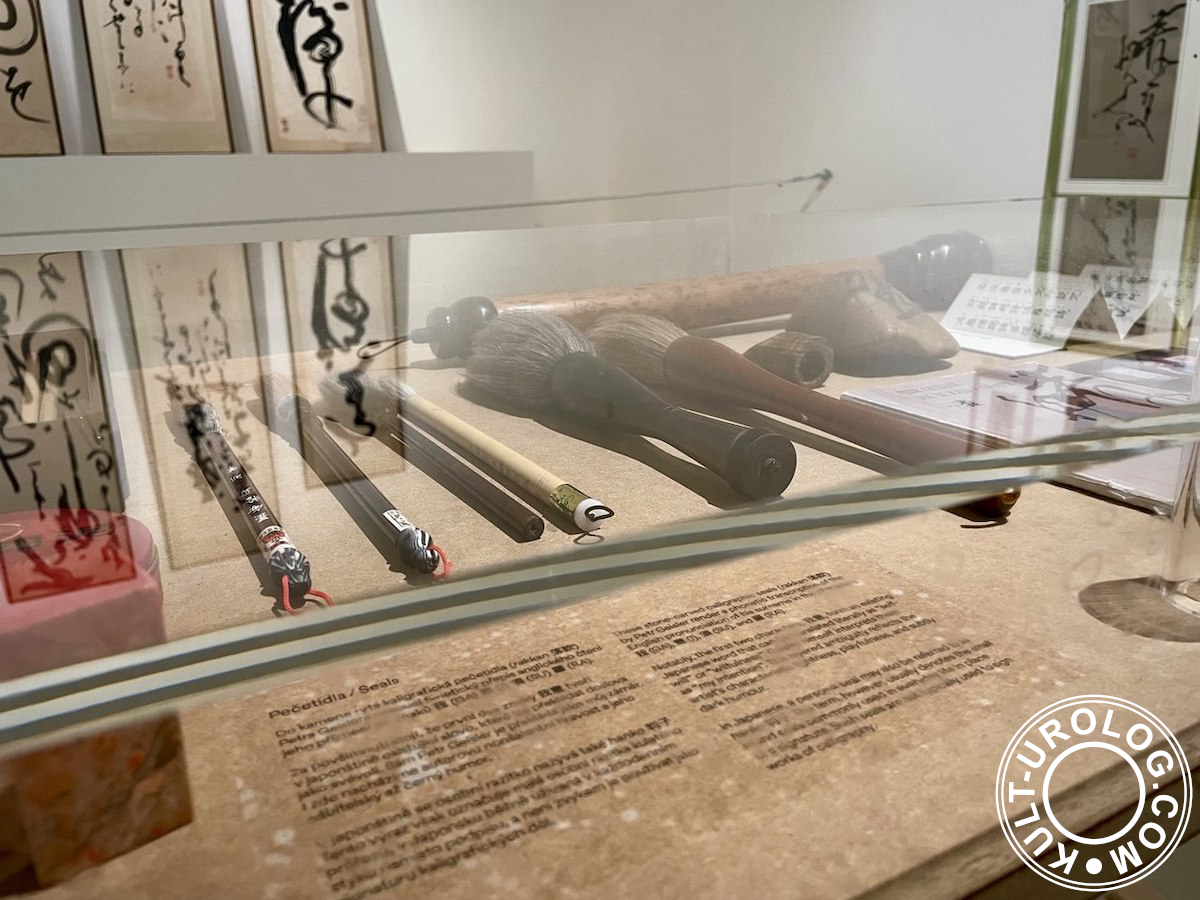
You can see why Geisler occupies such a place in Czech culture (and in lives of the Japanese in the Czech Republic… because it seems like they were all found and involved in the making process of GA-I-SU-RA), to see the photographs he took in Japan, to watch the family chronicles (the main responsible person and ideological inspirer of GA-I-SU-RA is the protagonist’s daughter, Ester Geisler), to look at his brushes and work table, to get acquainted with his kanji drawings… and to think about the difference between Japanese calligraphy and Czech calligraphy. Because either we create a separate category for this (well, it has already been said that Geisler had his own special style), or we admit that drawings are drawings (some even made in gold), and not writings.
Unpopular opinion, I know, but if frames, backgrounds, and materials are more noticeable than everything else, something is wrong (okay, the average visitor will never read what’s written there, but on the other hand, what else besides the decorative function will remain in their memory?).
And no matter what theoretical basis was created for this, it is hard to agree with the main idea, even if it all looks beautiful.
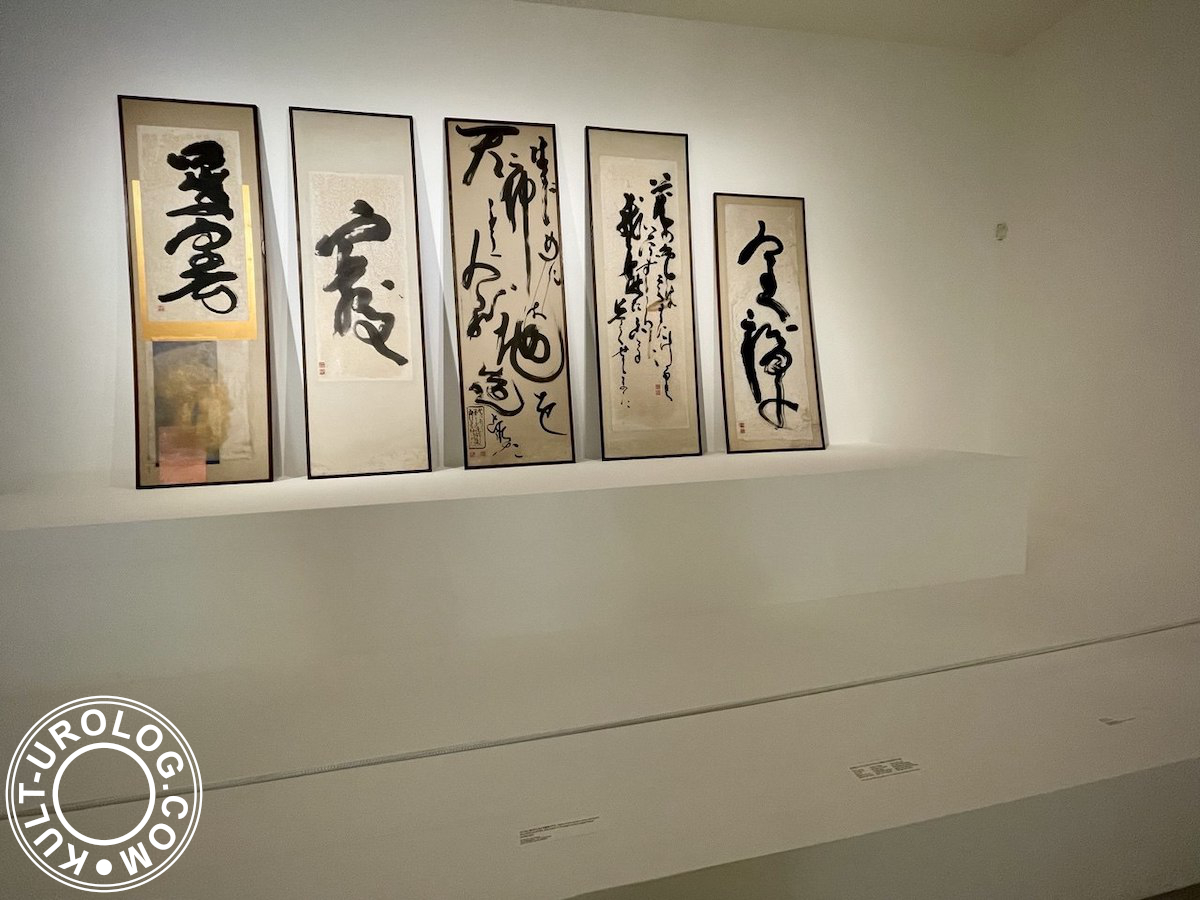
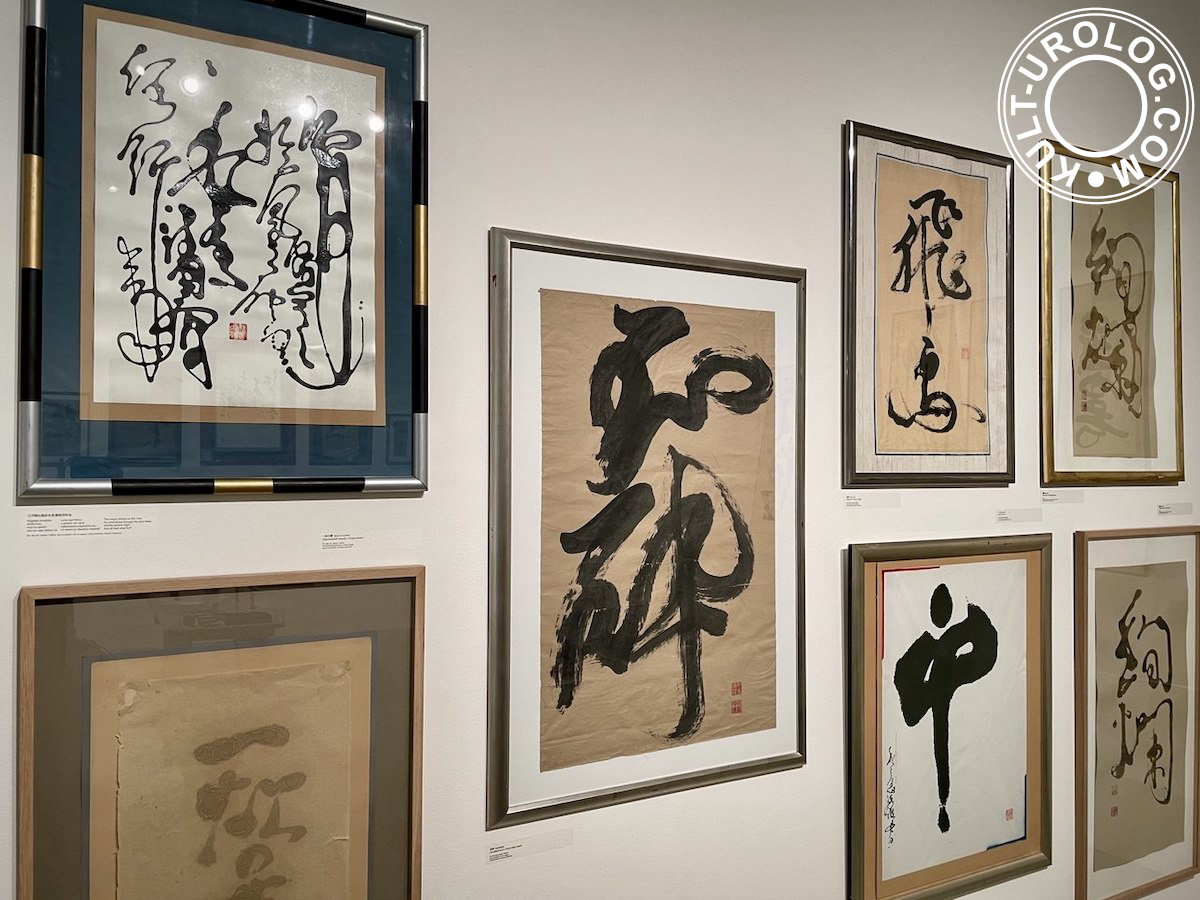
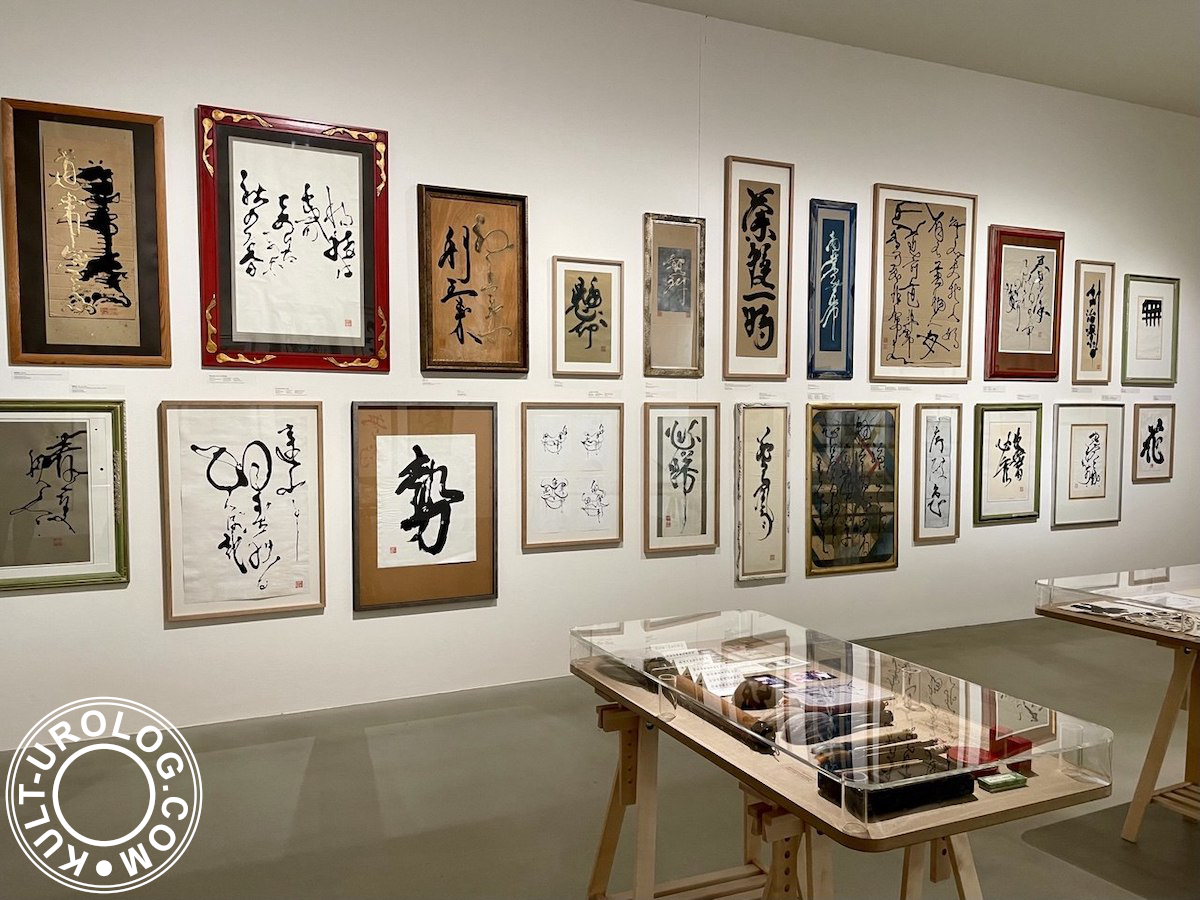
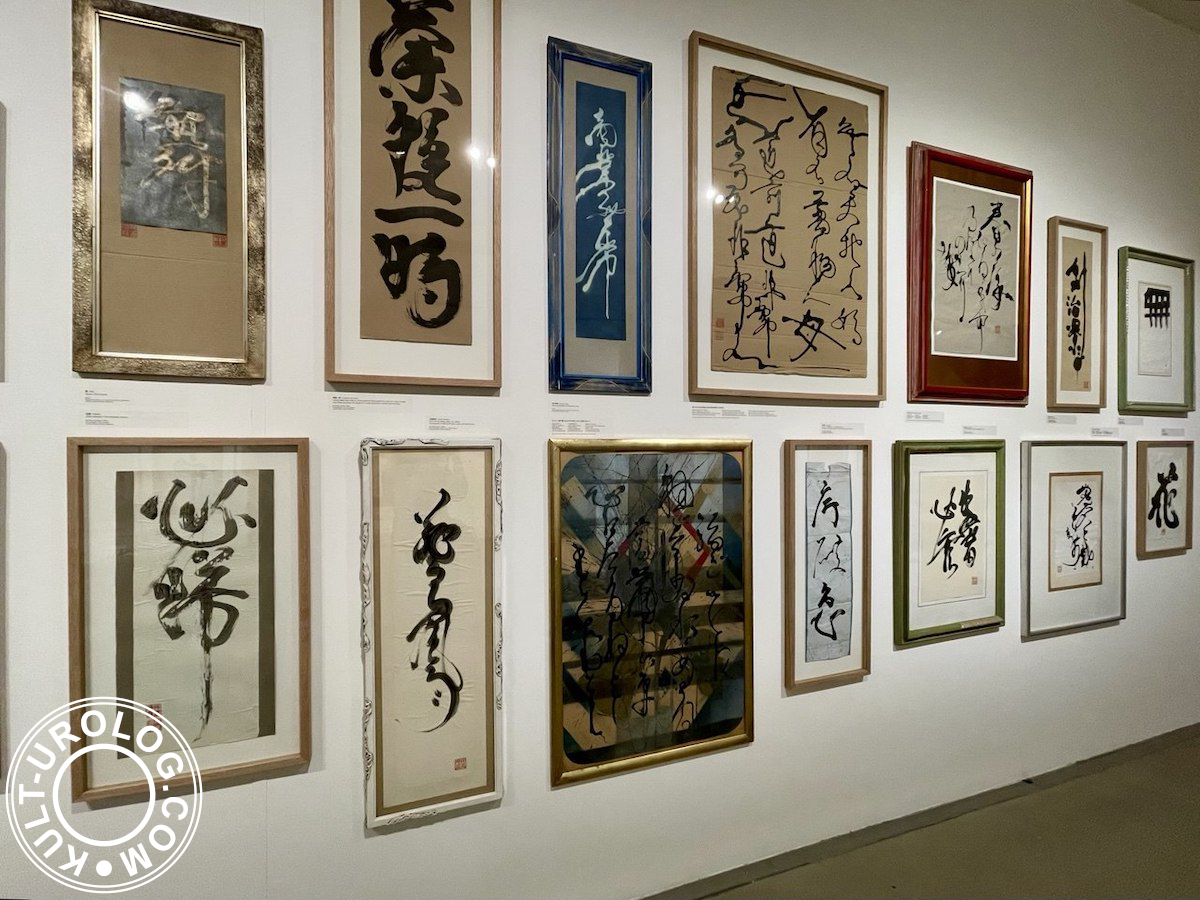
Stylised kanji, with a distinctly European writing (and drawing) style, and a fancy frame. An interesting European who’s interested in calligraphy. At least, that’s the impression that’s left after GA-I-SU-RA. But, no objections, as a personal path to calligraphy it is incredible, not to mention that Geisler’s deep understanding of the principles of calligraphy becomes clear in just a couple of sentences from the interview (and if you watch the recording longer, the level of understanding begins to seem even deeper), which actually makes one think that there are other works somewhere that can be used to draw other conclusions (but this is not certain).
Everyone has their heroes and notable figures, the question is how to present their achievements. «Czechization» of everything and everyone is a common phenomenon here (and sometimes they go too far). When Tōru Takemitsu is called «the Japanese Zdeněk Liška» in the description of one of the events for the exhibition, it becomes somehow awkward (by the way, let’s just figure out for fun how many people know Liška and how many know Takemitsu… right, usually people don’t know both).
But looking at other things and peering into other cultures is not customary here, because it is much more interesting to give another new meanings to one’s own, time after time. Not all cultures exhibit comparable indifference (or disregard, if you prefer) to the world around them (but they don’t want to promote their own culture either, leaving others to figure it out for themselves; where is the Wikipedia article about Geisler in any language other than Czech? it doesn’t not exist). At best, everything is focused on finding one’s own in someone else’s, preference is given to positive aspects, so as not to compare controversial things (very convenient, but who does otherwise?).
And the question is: does anyone here need the real Japanese calligraphy?
At all times people have found their own ways to express themselves and get joy from it (or suffer from it, often it’s the same thing), some of them became great or universally recognised (or only locally), but in the existing context, the description of one of the Geisler’s books, Jak se kali.grafie: «Exhibition of seventy new calligraphy works by Czech artist and Japanologist Petr Geisler in the Asian Art Collection of the National Gallery in Prague» appears somewhat ambiguous, whatever is really meant.
But, okay, let it remain so.
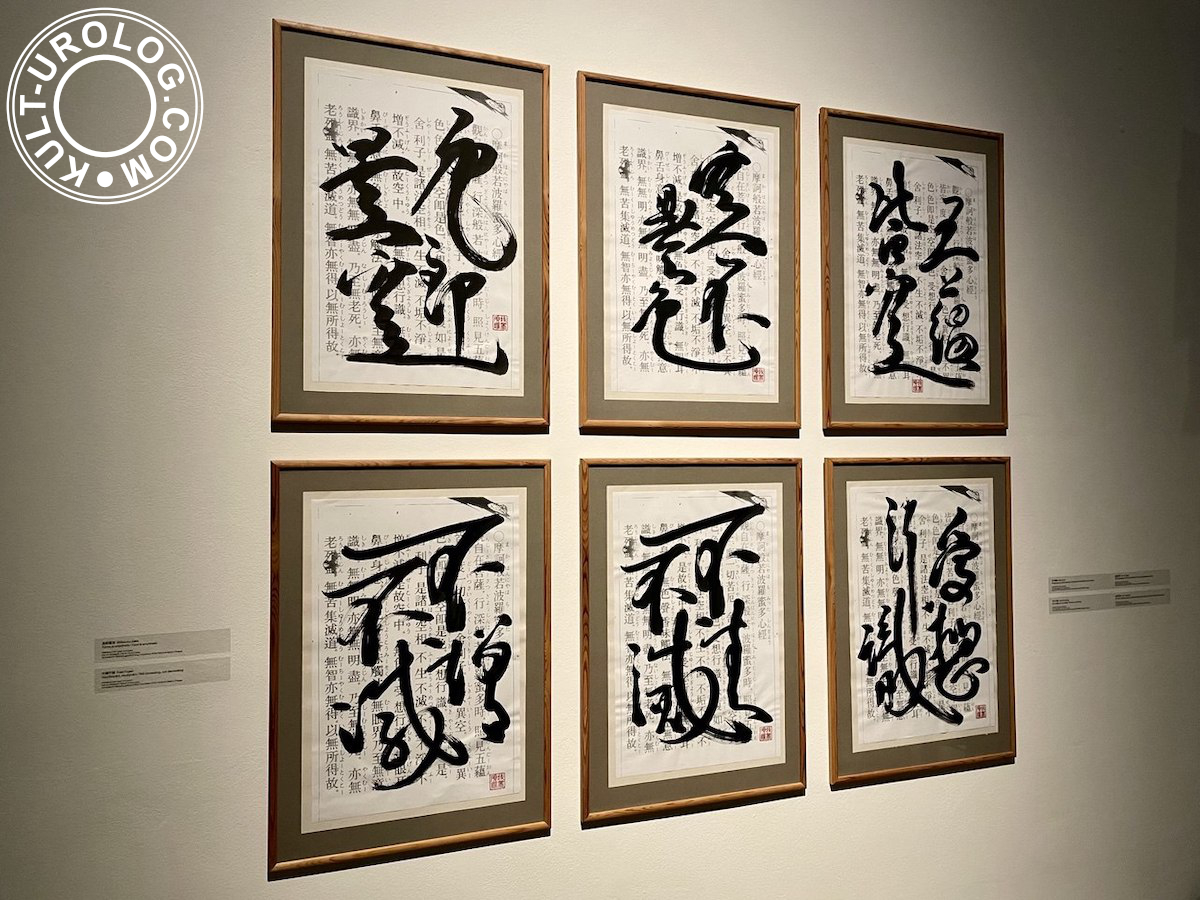
The line on the paper gives you an idea of how the brush was held and what movements were made. Visiting the exhibition space gives you a feeling of contact with beauty, plus memories.
The patriot-friendly price of the exhibition catalogue (around one hundred euros) gives you a subtle hint: to become a Japanologists, kids, you have to be rich, or to have connections. And it’s up to you to choose both of the options.
