Summer is over, and so is my Tokyobike’s customization (at least, its first main phase).
This is my bike, I like it, I’ve waited for it for a long time (not for this particular one, I saw it differently: the colour, the frame size…), and I was planning to change it right away. Because it can look cuter and it should look cuter.
Though I didn’t really want any big changes for this cycling season. Only for the next summer, but not for now. But since my new bike was made five years ago (the same ones have already been discontinued) and then stored in conditions I’m not sure I want to know anything about, its cable donuts turned yellow and sticky, and the inner tubes were constantly deflating.
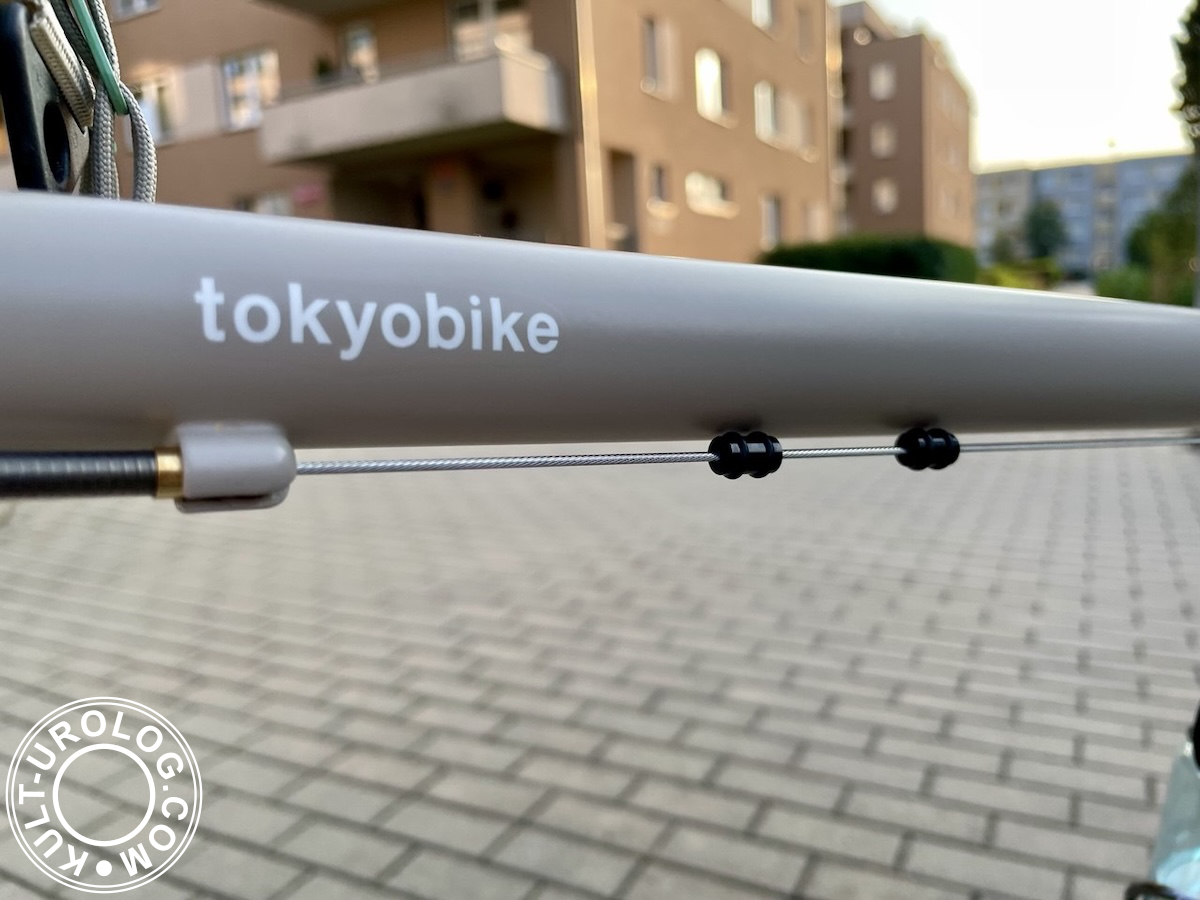
Something had to be done. I don’t know an easy way to replace cable donuts, I can only remove everything, together with the old wires, and if I carry out such an intervention, then why not to install everything else that I have already collected.
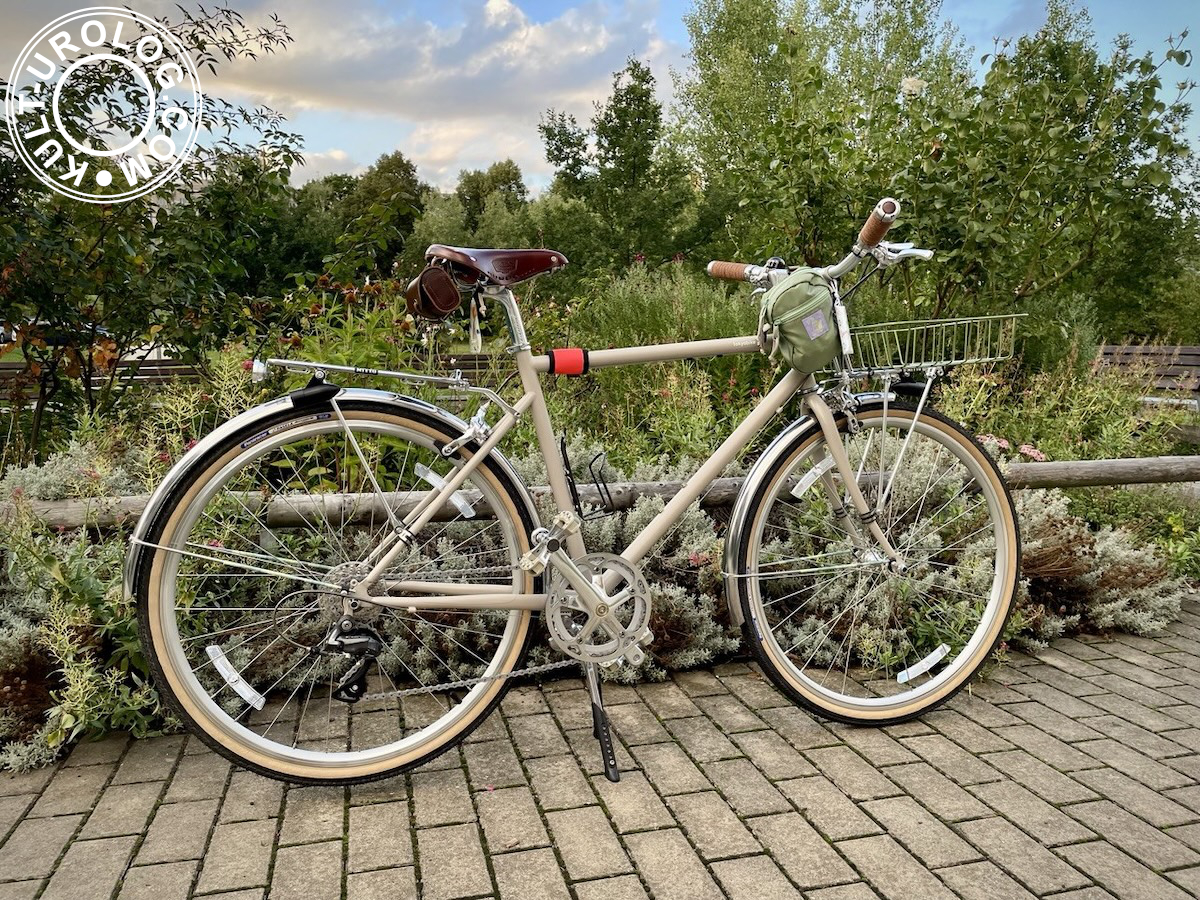
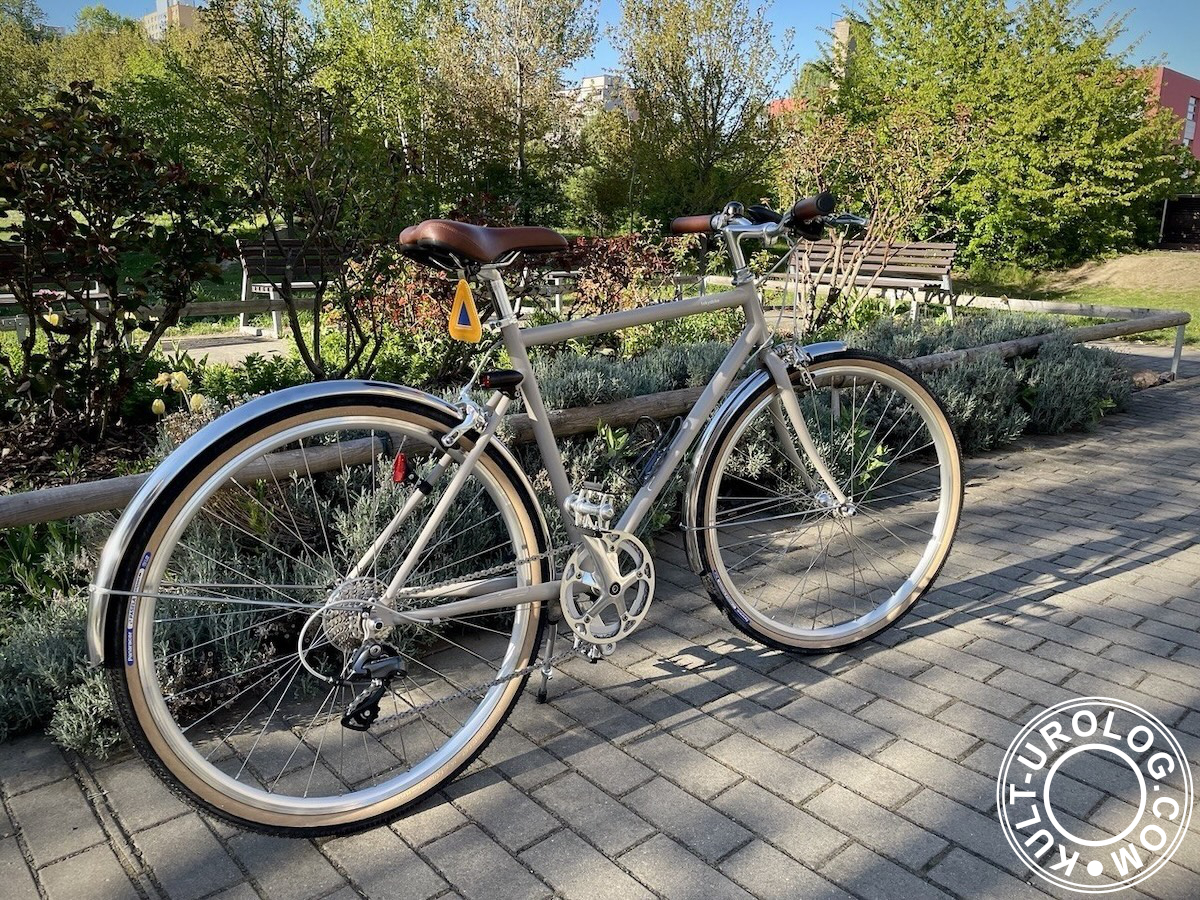
I tried not to violate the original idea and not to change everything beyond recognition, in order to preserve the original appearance that initially attracted me in Tokyobike. And, of course, I didn’t do it all myself. I had help (including our kitten, who supervised the entire process).
We are not mechanics, we don’t have a workshop, and I keep my bike in the bedroom because our apartment is not very spacious.
But we managed to do everything ourselves (because we are professionals, in the end, we are specialists, a specialist in cultural studies and an IT specialist, to be more precise), step by step and in a quiet home environment. Mostly at night, because during the day it was too hot for such work.
And I’m proud of us. We read a lot, mastered a lot, learned a lot, and didn’t fail a lot (we didn’t fail anything). And I even can’t say that it was difficult (for example, the legend says, mounting a saddle on a Nitto seatpost is a tricky task — I believe it, but now I also don’t believe it, I really didn’t find anything tricky there). It was time-consuming, that is true (to figure out what was needed, plus delivery time), but definitely not difficult.
Communication with Czech FedEx wasn’t easy, that’s probably what I can mention, but only because nobody answered our questions about assessed taxes since at first our requests were in English (no matter how international a company is, some of its features may disappear in the Czech Republic).
But, okay, thanks to FedEx we had a direct supply line from Japan to Prague (more Tokyo parts from Tokyo for Tokyobike!).
We ordered parts from Blue Lug, installed them, removed them (as it happened to KoMA reflector, or Nitto end caps), replaced them (some of the parts were put on another bike, and are now happily used there), ordered more, and installed something else that wasn’t in the original plans.
For example, the struts that came with the rear rack were too long for my frame (47 cm, the smallest one among Classic Sports). I don’t know what I was expecting, at least I was smart enough to order a pair of bent struts, but for a while my bike had struts sticking out, which, as a temporary solution, were turned into little flags using reflective stickers. Actually, from a certain point of view, this was even convenient. It helped to better secure small boxes and packages to the rack (recently I read Nagisa Tatsumi’s The Art of Discarding, that one book that inspired Marie Kondo, so my bike became a cargo bike: to ride to recycling centres and to charity containers, with both my racks, moderately, loaded). But we had to order the proper struts anyway.
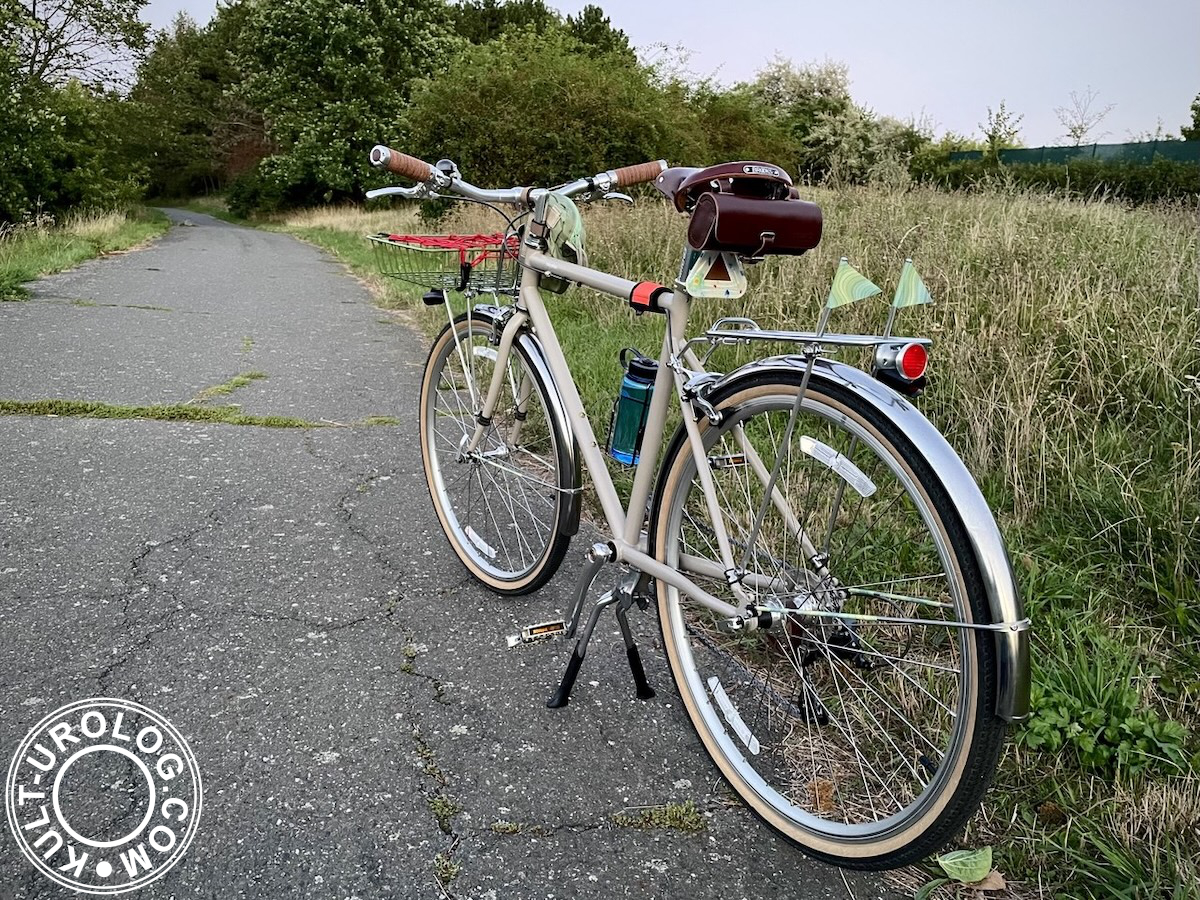
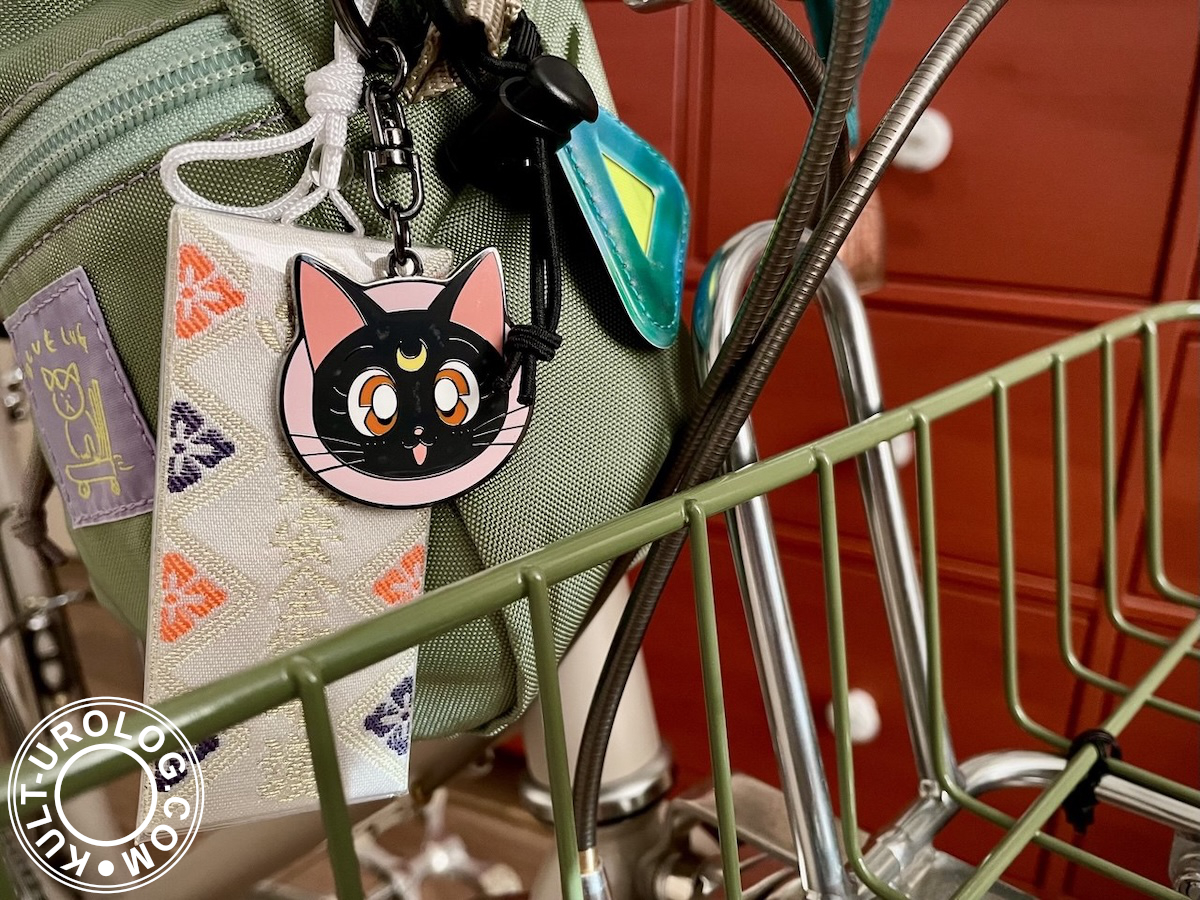
The previous changes are listed in the previous text, I don’t see the point in repeating them (everything remains the same, I only removed the KoMA reflector and re-hung the Rindow lamps; and instead of a Korok keychain there is a Luna keychain, because it was too much of green colour in accessories, and I needed some black and pink accents to make that green pop). And I don’t know whether I want to remove the fenders from the bike completely (I try not to ride in the rain, not for the bike’s sake, but for my own, so I’m not sure it’s a must), or I want to equip them with some kind of spacers (they still look very Japanese). Because they creak and rattle, and it’s not a part of an old school charm, it’s simply annoying.
Here is the list of what was added lately:
Handlebar: Tokyobike x Nitto, Breezy Bar, B813AAF, with 630 mm length (legally, the maximum handlebars’ width permitted for riding on sidewalks in Japan is 600 mm, so it seems that riding on sidewalks with Breezy is a little bit forbidden).
I haven’t removed the red Nitto sticker from the handlebar yet, I’m not that brave, so I hide it under a rubber band of my Blue Lug’s bike pocket.
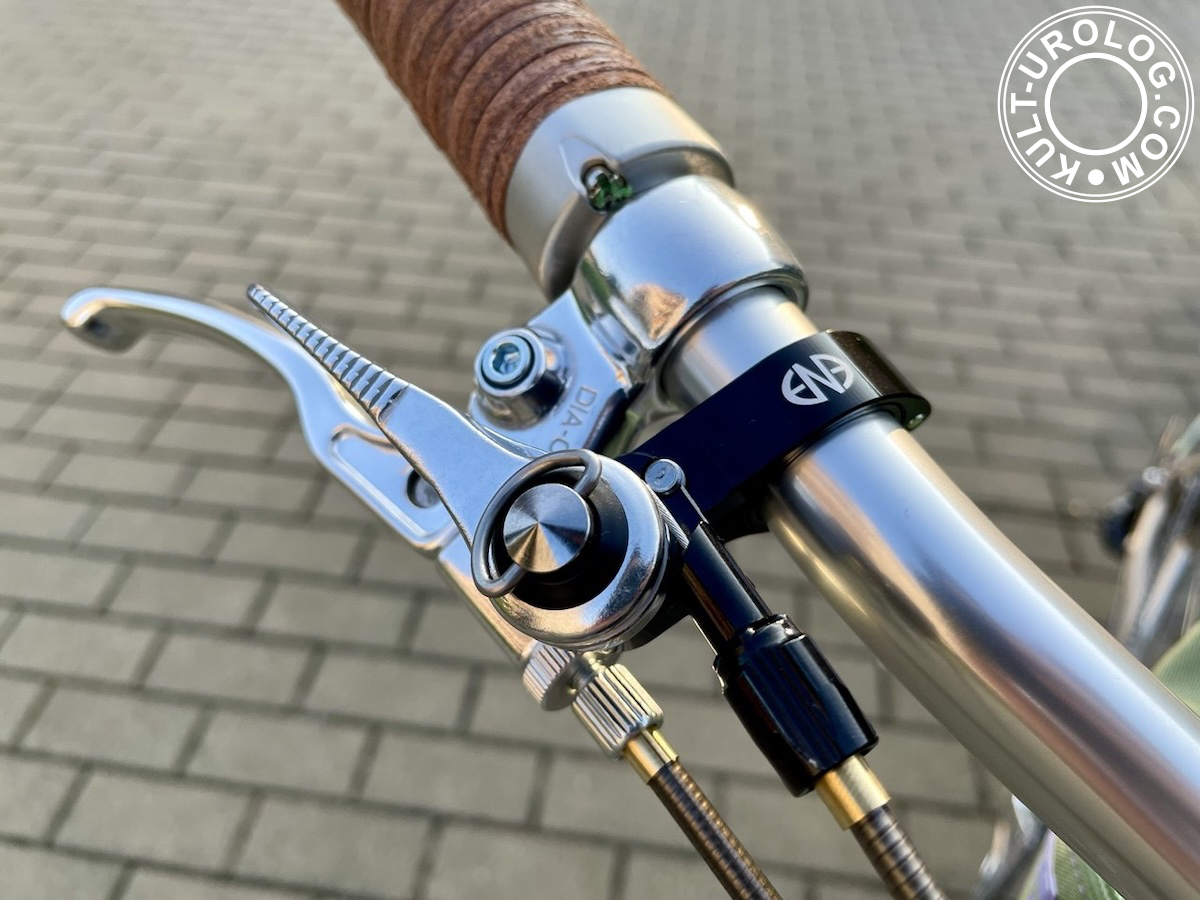
Brake Levers: Dia-Compe tech-5 brake lever BL special (all polish), 183 TECH-5
Thumb Shifter: ENE Thumb Shifter by Dia-Compe (Black, Right)
One of the best decisions. Very practical and compact (comparing to Shimano), and it really makes shifting between gears easier.
Cables: Nissen brake inner wire SP31 (MTB) and shift inner wire SP31; SimWorks x Nissen stainless outer cables (Clear Black); SimWorks x Nissen brass outer caps for housings (4 mm and 5 mm); Ashima cable donuts (Black); Forager Cycles cable cherries (Brass).
I respect trends, but there are some things I’m not ready to accept, so I didn’t make any skein of wires. If there are two or three meters of cables in the package, that’s no reason to install everything. So cables are slightly longer than it was in the beginning, allowing for the new wide handlebar, for example. It looks neat, and I like it.
Stem: Nitto NP II NJS Quill Stem (Silver). Extension: 80 mm, angle: 71°, Steerer Tube Length: 150 mm. NJS (Nihon Jitensha Shinkōkai — Japan Bicycle Promotion Association) approved, with Nitto Bolt Cap (6 mm).
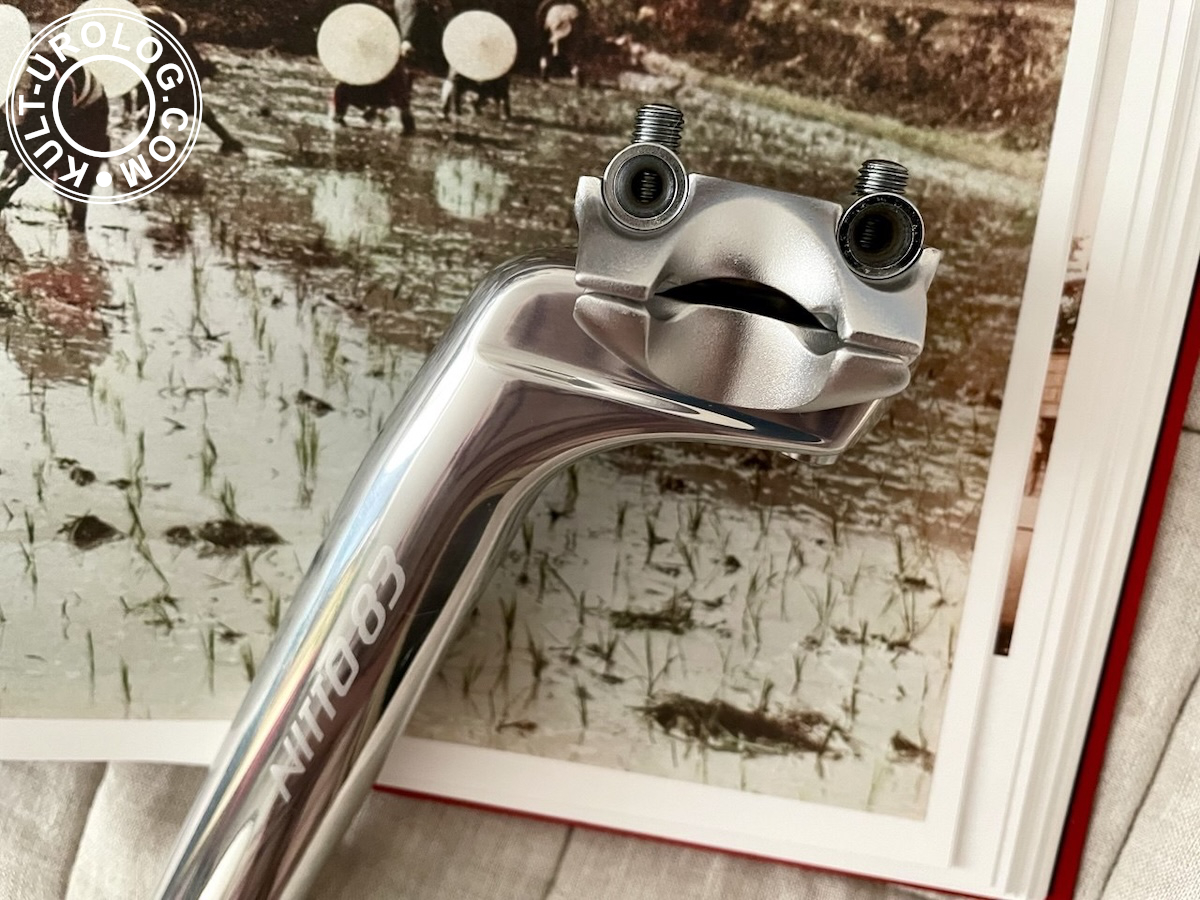
Seatpost: Nitto S83 (Silver) Length: 250 mm, diameter: 26.8 mm
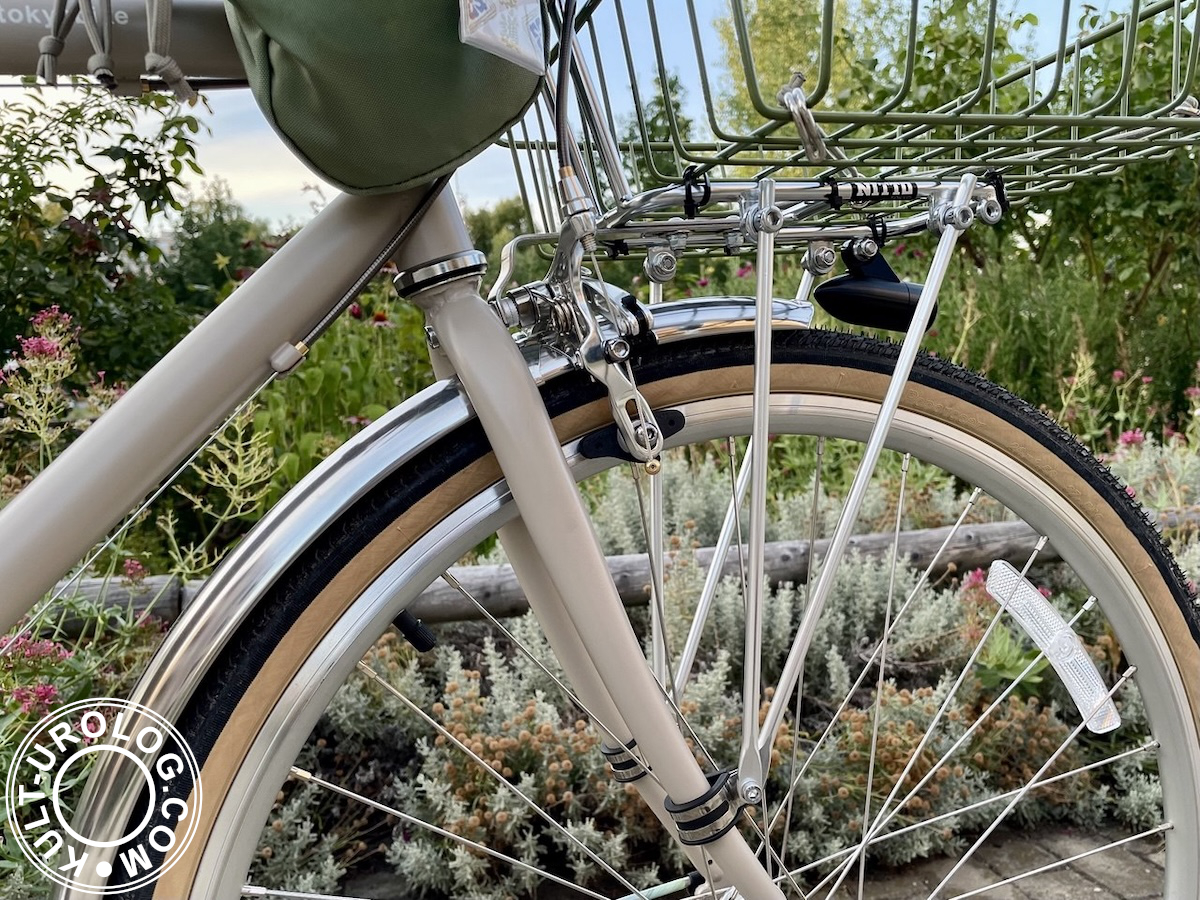
Front Rack: Nitto M-1B (Silver)
Some say it’s as rare as a dodo. I spent two weeks meditating on the Blue Lug’s page, wondering if I needed it, then ordered it, and only later found out I was lucky. Maybe, I don’t know. In any case, I like that instead of a regular basket, I now have a more flexible option.
Basket: Blue Lug Select Everyday Basket (Olive)
Rear Rack: Nitto x Rivendell R14 (Silver), with Nitto bent struts and Nitto straight struts 300 mm (bought separately, because, nope, I can’t easily cut them with hacksaw, as Blue Lug advises), with Kimura reflector for carrier (40 mm, classic)
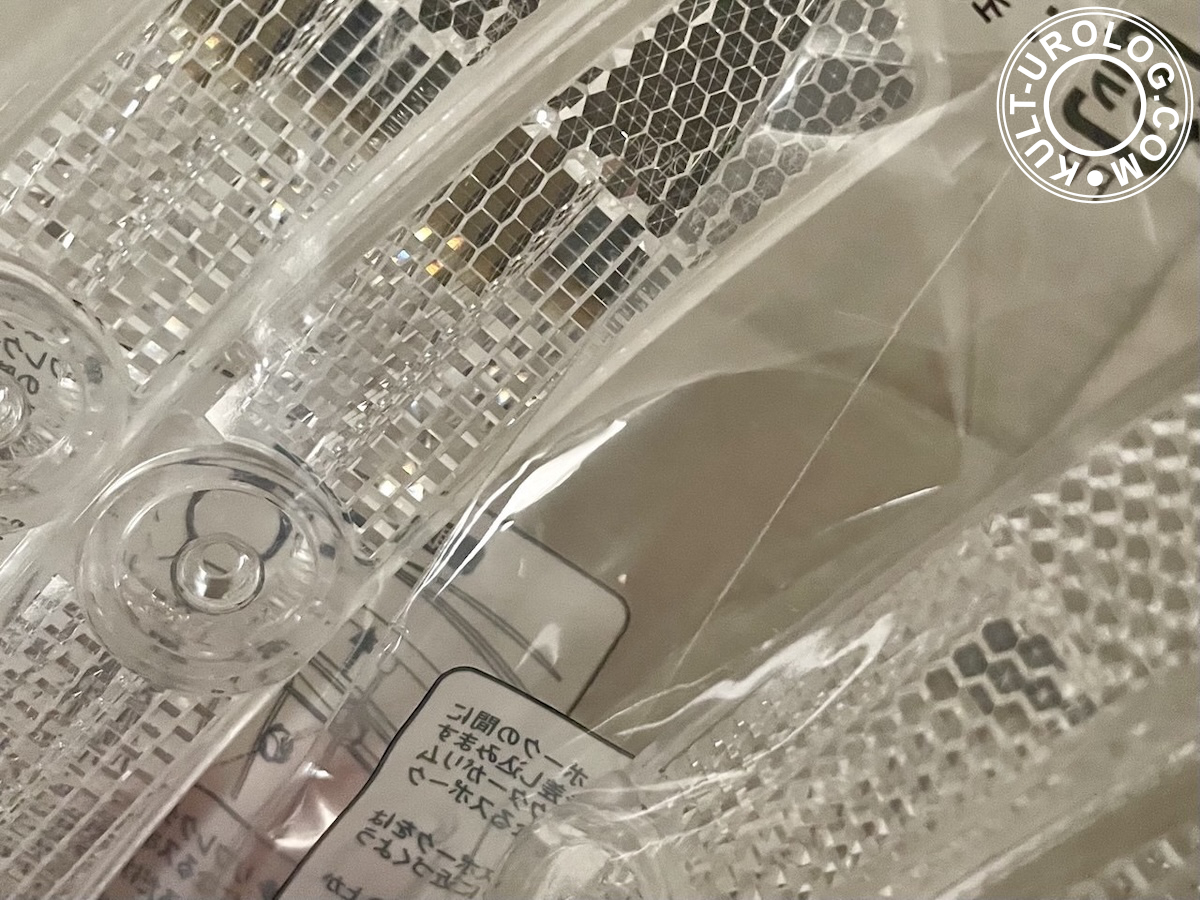
Wheel Reflectors: CAT EYE RR-550N-WUW/W (2 kits of 2)
I know these reflectors don’t comply with Czech regulations, but at least I have them (usually, it’s a rare sight). And the Japanese reflectors look much more elegant than all the others (and they shine bright like a diamond).
Omamori: Road safety Protection, from Sojiji, Ibaraki, Osaka
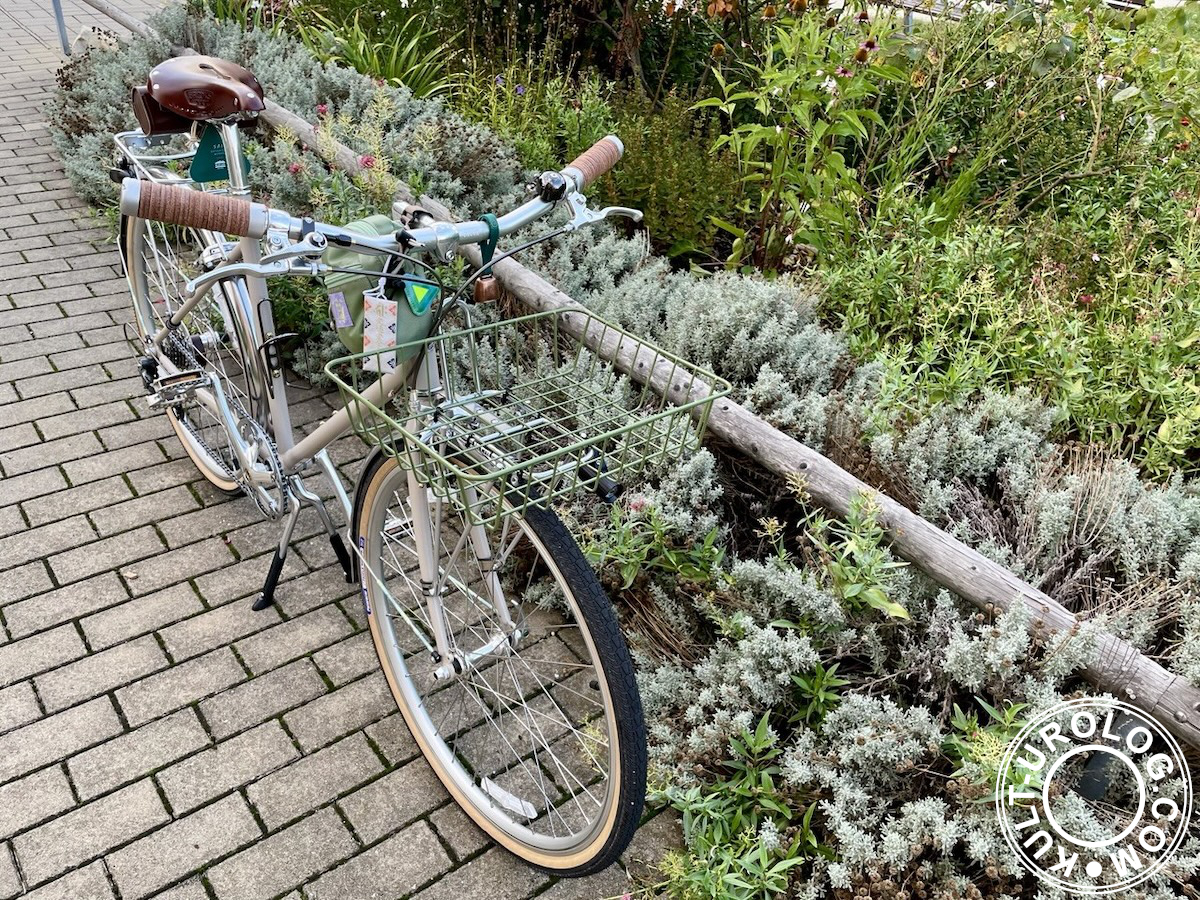
As a finishing touch, a Kizuki bell was hanged on the handlebar (its dark green ribbon goes well with Blue Lug reflectors).
Now when I ride down the road, everyone can hear the clinking sound, especially me (though on smooth roads this bell is of little use, it needs bumps and pits). Have I strayed from the herd? Have I escaped from a leprosarium? Who knows! Nothing could harm my image as the town madman (or madwoman). I already look weird enough without any Lycra, but with shiny fenders and leather saddle (they call me a hipster here, these people in my neighbourhood).
In any case, it’s a great addition to the regular bike bell, and it makes me more noticeable on the road. It also appears more polite than coughing behind a pedestrian’s back (and not to thank them for letting you pass on the shared path) as is customary among local cyclists.
If I know it’s useful (and it scares away wolves; theoretically; at least in Germany people buy bells like mine for this purpose), and so do some people in Japan, and some in London (Tokyobike, where I bought it, for example), and so do my family, that’s enough.
I don’t deny it, all the changes were made mainly for aesthetics. The seatpost was ugly, the brake levers looked rough (they were comfortable and I liked that, but they were not good-looking, so I found something better). The handlebar (and everything on it) was completely replaced.
But nothing is superfluous here (except for the copper and titanium bolts), nothing is (too) fancy or (too) expensive, and everything is very functional (even bolts). And I didn’t touch what I was already happy with (brakes, frame…).
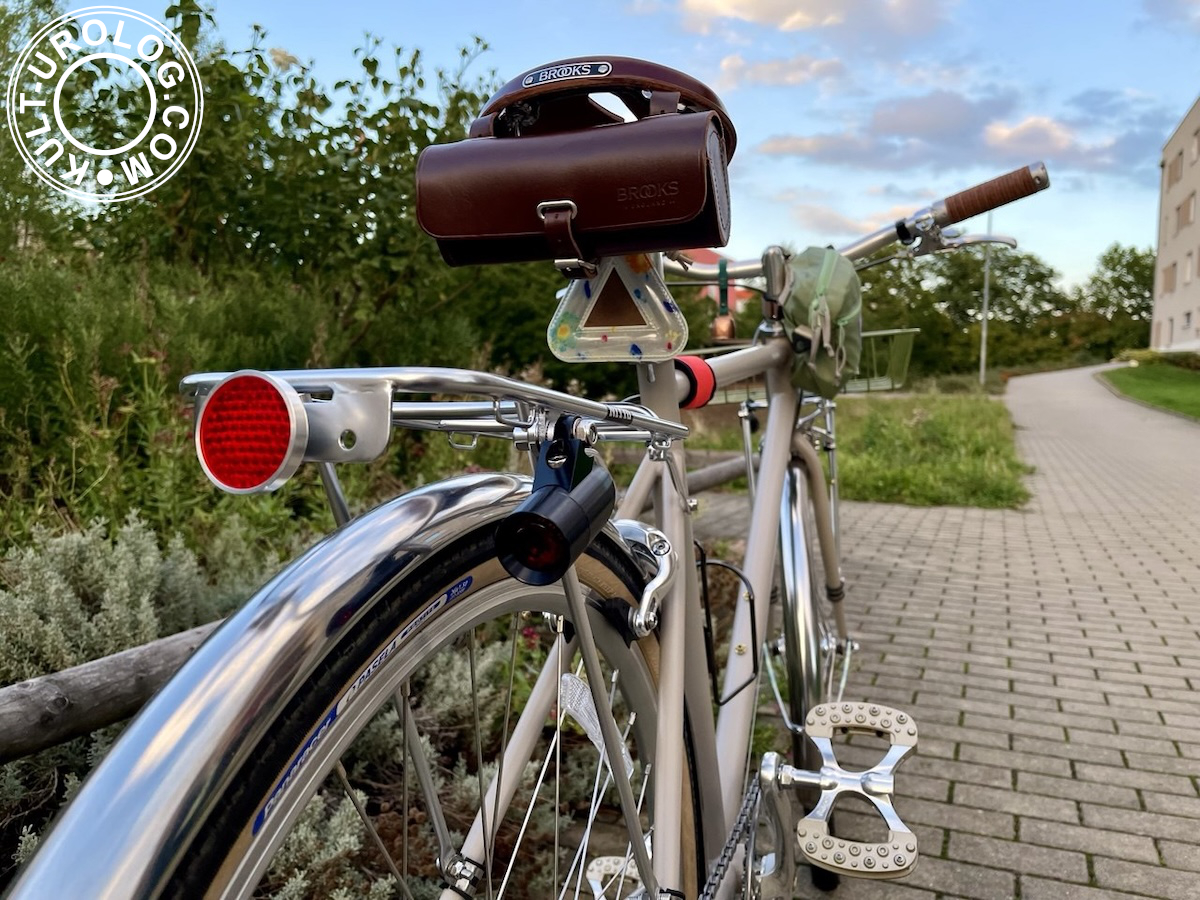
As a result, now everything suits me perfectly. Because to have only the frame of my size was not enough. It was the right height for me, yes, but I felt cramped while riding, and I wanted the saddle to be a little further away, and the handlebar to become a little wider. Not to change everything, but to add a few minor adjustments, like hemming jeans or adjusting the shoulders of a jacket: a couple of centimetres here, a couple of centimetres there…
The new seatpost allowed to move the saddle back (the lacing got in the way with the old mount), the handlebar’s shape made it possible to put the stem lower (and the stem differs too), so the angle of my riding position slightly changed (finally), and now this bike is really made to my measurements (and the extra weight the bike gained in the end turned out to be insignificant — nice). This is not just a bicycle, this is definitely my bicycle now.
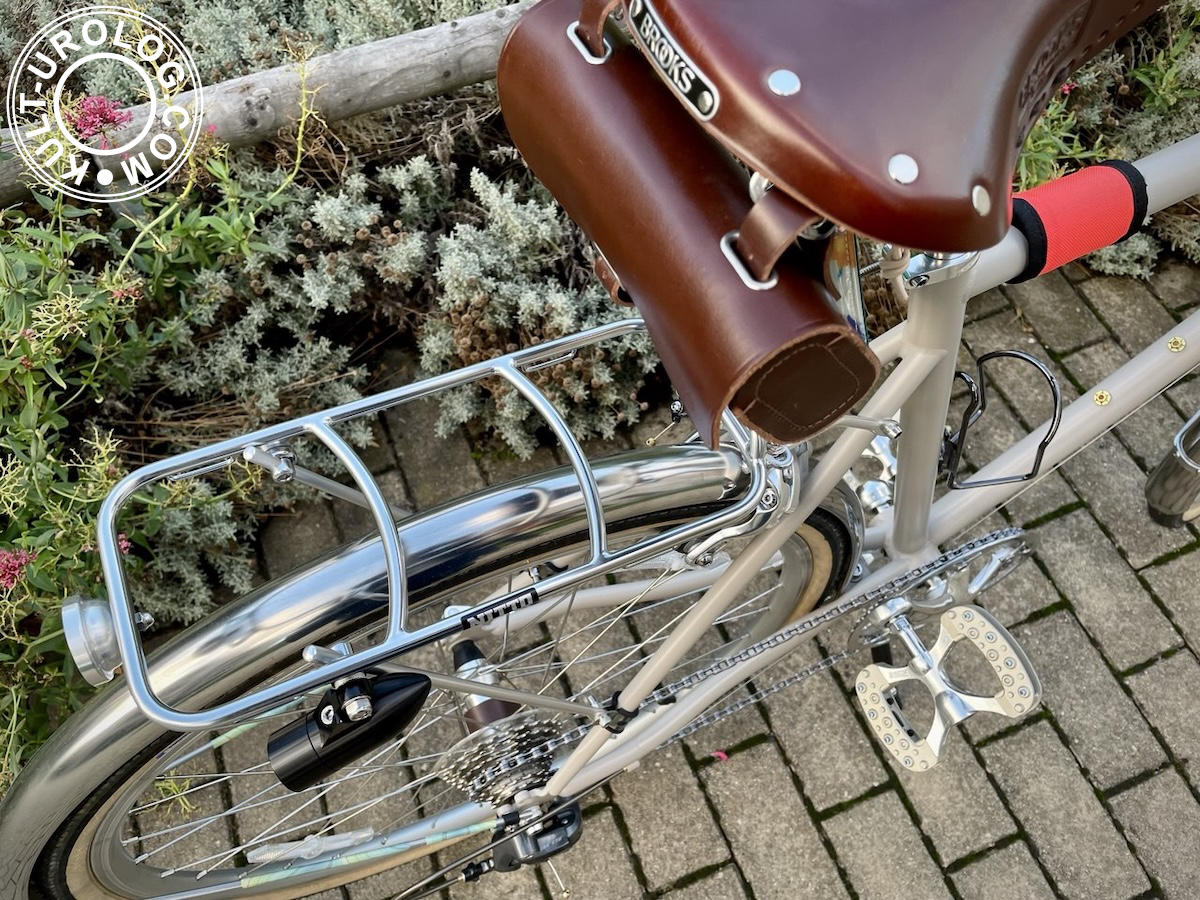
I also like that everything doesn’t follow a specific plan, but appears as if by itself, sometimes out of necessity, sometimes by chance.
Racks, for example. When I was joking that for proper customization Tokyobike needs a Brooks saddle and a basket, I was only joking. I just wanted to ride my bike, more or less comfortably, nothing more, and it was so basketless when purchased that it didn’t even have a Happy New Bike Day on Prague’s Tokyobike Instagram: they prefer to show bikes with baskets, especially if these bikes are Bisou.
But now I’ve got even a rear rack and a full set of nets and straps of all sizes. Somehow, everything naturally turned out into the gold standard that can be seen everywhere on Japanese streets.
New chain and sprockets (Shimano Alivio CS-HG51-8, 11-32 teeth) are already prepared, but will be replaced next year. Well, I hope so. This bike changes constantly, like it’s alive, and every detail, no matter how small, when added, gives a new mood to it. From time to time I get the feeling that it’s not me who decides what mood my bike will choose. But it’s fine since our tastes coincide.
